Of all the hinterland places I've told you about, there's one that's my favourite, and I said it plainly: Censin da Bea, in Borgomaro. It's the closest of the real valley places — barely twenty minutes from Oneglia — and that's exactly why it's the one I end up at most often, on the day I've had enough fish and I feel like heading up.
It sits up the Maro valley, one of those valleys that from Imperia start at the sea and push their way into the hills, one behind the other. You leave the coast, take a few bends, and all at once the air changes: the beach umbrellas disappear and the green arrives, the terraced olive groves, the villages clinging to the rock. By the time you reach Borgomaro you've already understood you're in another world, and that you were right to get in the car.
An 18th-century oil mill
The first thing that gets you, here, is the place itself.
Censin da Bea is inside an old 18th-century oil mill, and that isn't a brochure turn of phrase: you walk in and you still find the old stone millstones, right there, in the middle of the room. The grinding wheels, the mill gears, the wheel that once turned with the water of the stream. The three little rooms are made of stone and wood, with the tables laid in red-and-white checked cloth, and all around the gear of a country life: the pumpkins, the braids of garlic, the copper pots hanging, the bottles. It's the kind of place where you sit down and understand, without anyone explaining it to you, that you've crossed to the other side of the hill.
The name itself tells the valley: "Censin" was the old owner, and "Bea" is the stream that runs alongside the village and that turned the millstones. The mill ground oil until the 1950s; today it grinds memories, and it's beautiful just like that.
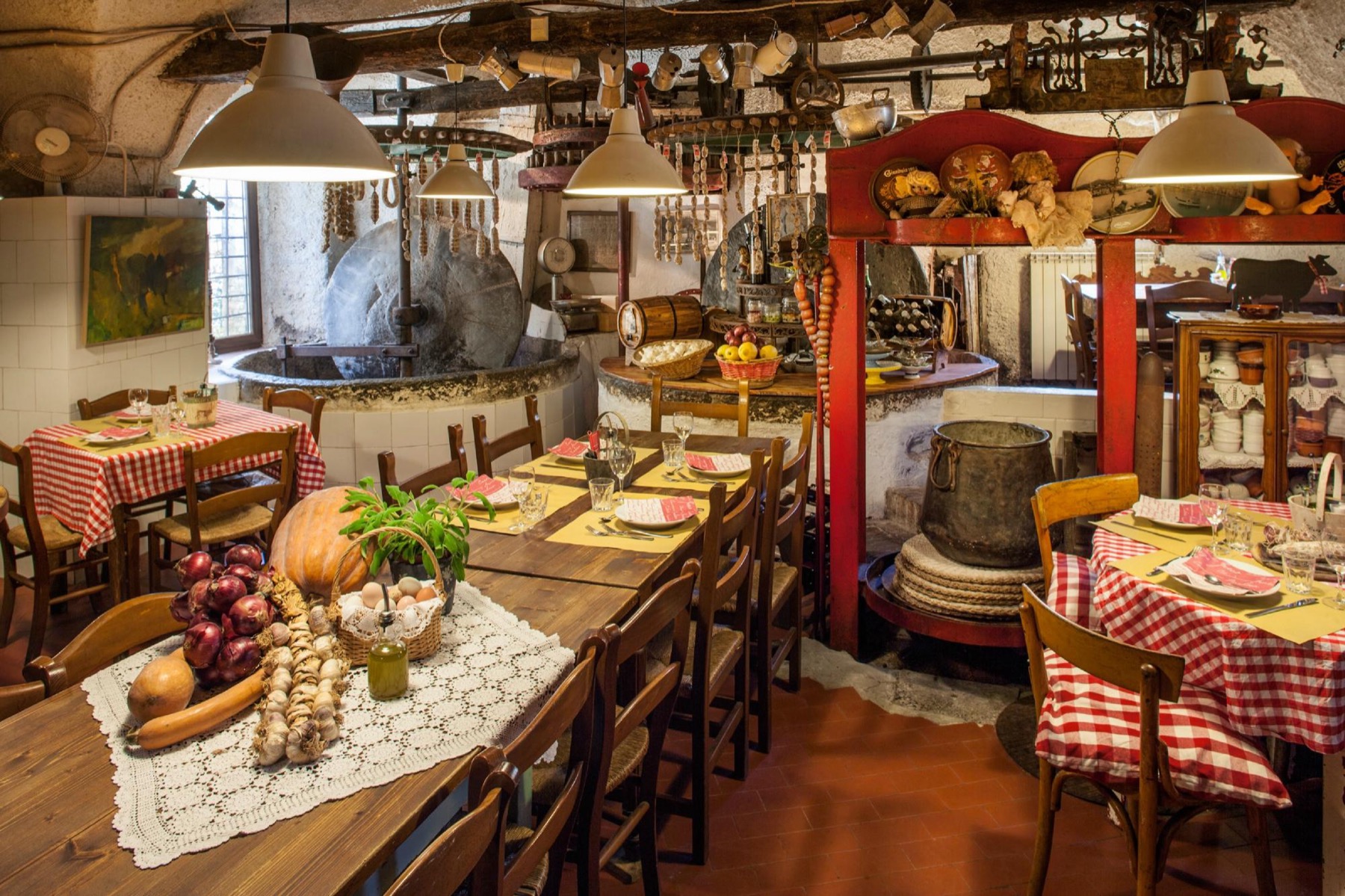 The dining room of Censin da Bea, with the old stone millstones of the mill still among the red-checked tables.
The cooking of the Ligurian mountains
And then there's what they bring to your plate, which is the reason people head up here in the first place.
Here the cooking is that of the Ligurian mountains, the kind that has never seen the sea. The anchovy disappears and the land arrives: Ligurian-style snails, guinea fowl, game — fallow deer, roe deer, wild boar, depending on the season. It's peasant Liguria, the real one, which up here has always been more about the land than the sea. Some people forget that, dazzled by the coast, but the valleys tell another story, made of game, mushrooms, herbs and oil.
It works as a fixed menu, around thirty-five euros, and what arrives is a parade that never ends: a dozen or so antipasti — the cold-cut board, the Taggiasca olives in brine, the bagna cauda, the green tart, the fried bread — then the house ravioli with butter and sage, the meat courses, and the desserts. You get up from the table having understood what valley cooking is: abundant, plain, with none of the frills built for the photo. Just good stuff, made the way it's always been made.
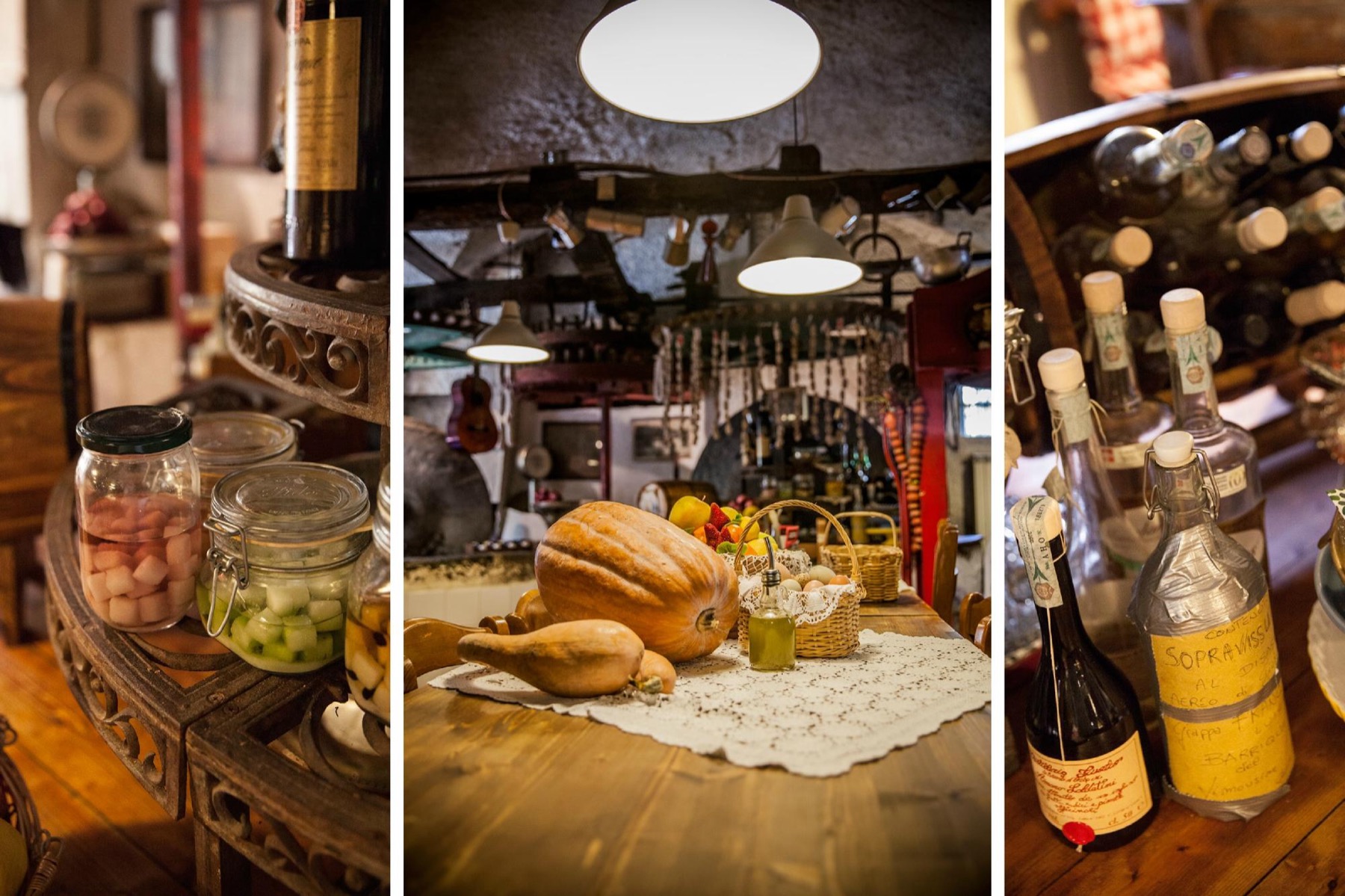 The preserves, the pickles and the apple distillate of the mill: the pantry of a country kitchen, on show in the dining room.
How to go
A few practical tips, from someone who cares about not sending you off on the wrong foot.
Borgomaro is about twenty minutes from Oneglia: take the car, head up the Maro valley, and you're there. You'll find it on Via Ambrogio Guglieri, right in the village. One recommendation that holds for the whole hinterland: up the valleys the hours follow the rhythm of the village, not the tourist's, and some places close a day a week or only in certain periods. You always make a phone call before setting off, especially out of season. On fine days there's the terrace outside too, among the stones and the green, with the red-checked tables: ask to eat out there, it's worth it.
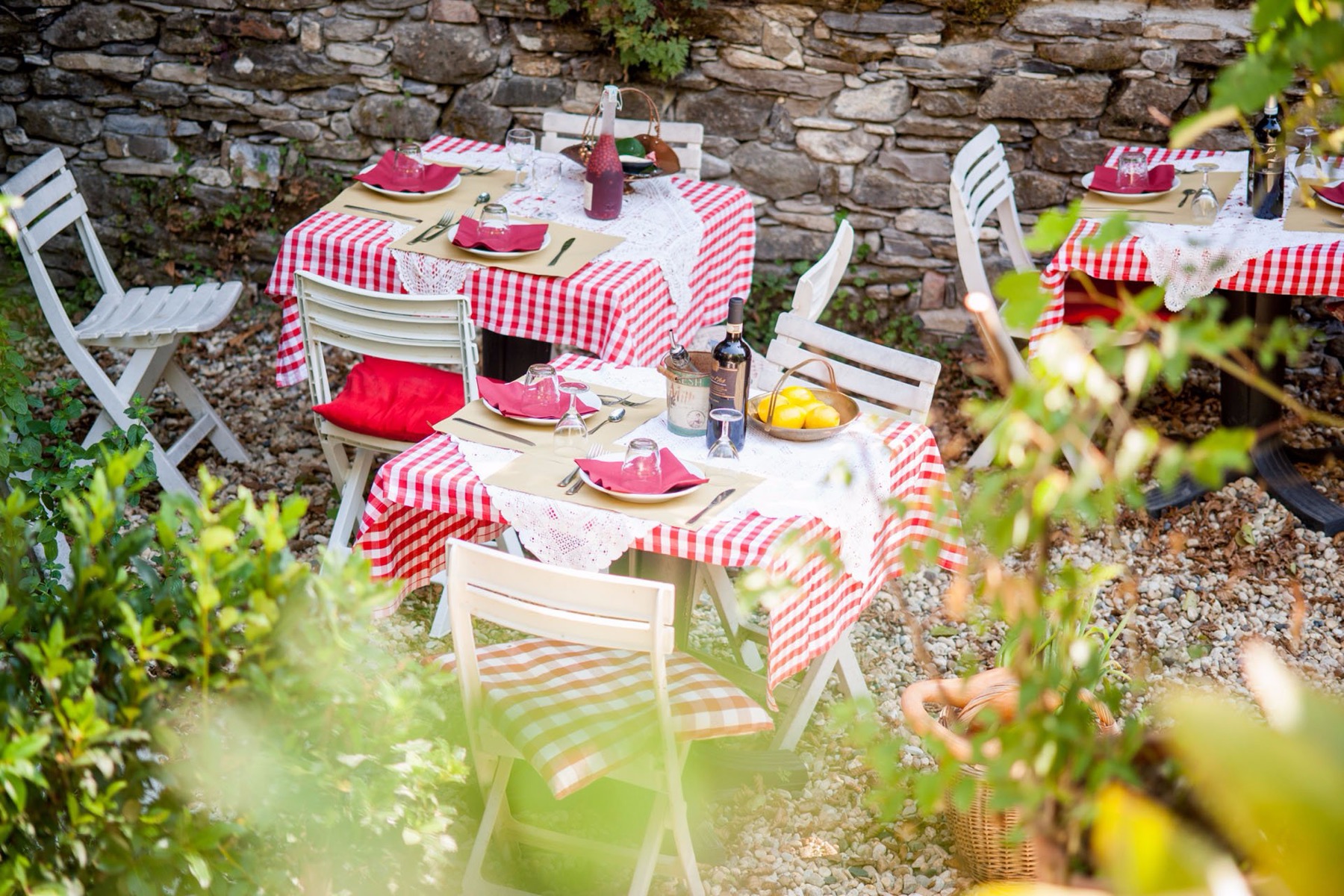 The outdoor terrace of Censin da Bea, among the stones and the green of the valley: the red-checked tables in the open air.
Censin da Bea is the first stop I'd suggest when you feel like eating off the land, but it isn't the only one: in where to eat off the land I've lined up six of them, from the town to the oil mill, for when the urge for the valley really takes hold. Start here, though. It's the closest, it's my favourite, and it's the one that makes you understand in one go why every so often, even on a seaside holiday, it's worth turning your back on the coast and heading up.
Where to find it
- A valley-cuisine restaurant in Borgomaro, up the Maro valley (~20 min from Oneglia), inside an old 18th-century oil mill with the original stone millstones still in the dining room. Cooking of the Ligurian mountains: Ligurian-style snails, guinea fowl, game (fallow deer, roe deer, wild boar), house ravioli, beef tagliata, and apple distillate. Fixed menu around €35. Up the valley the hours follow the village: best to phone ahead.Via Ambrogio Guglieri 14, Borgomaro (Imperia)