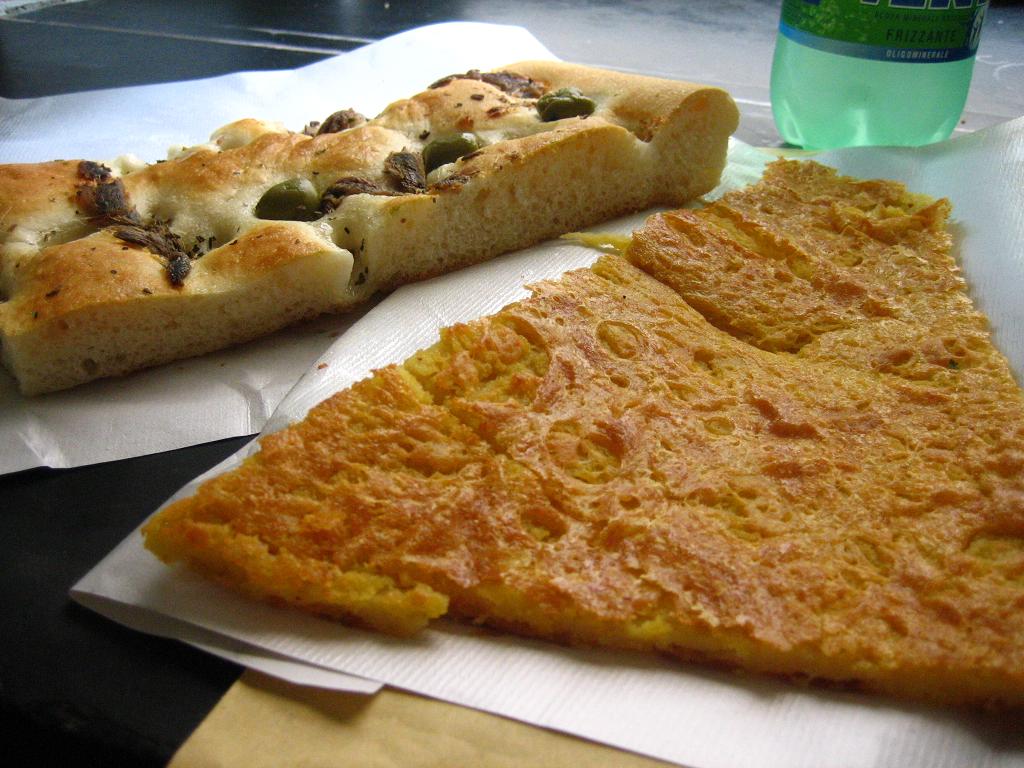
Farinata made at home is a satisfaction. But the real thing, with its scorched edge and the scent you catch from the street, only comes from a wood oven that has burned for generations. I gave you the recipe here; now I'll tell you where to go in Oneglia when you don't feel like turning on the oven.
Eat it hot, just cut, with a grind of pepper. No plate, standing up, from the piece of paper: that is how it makes the most sense.
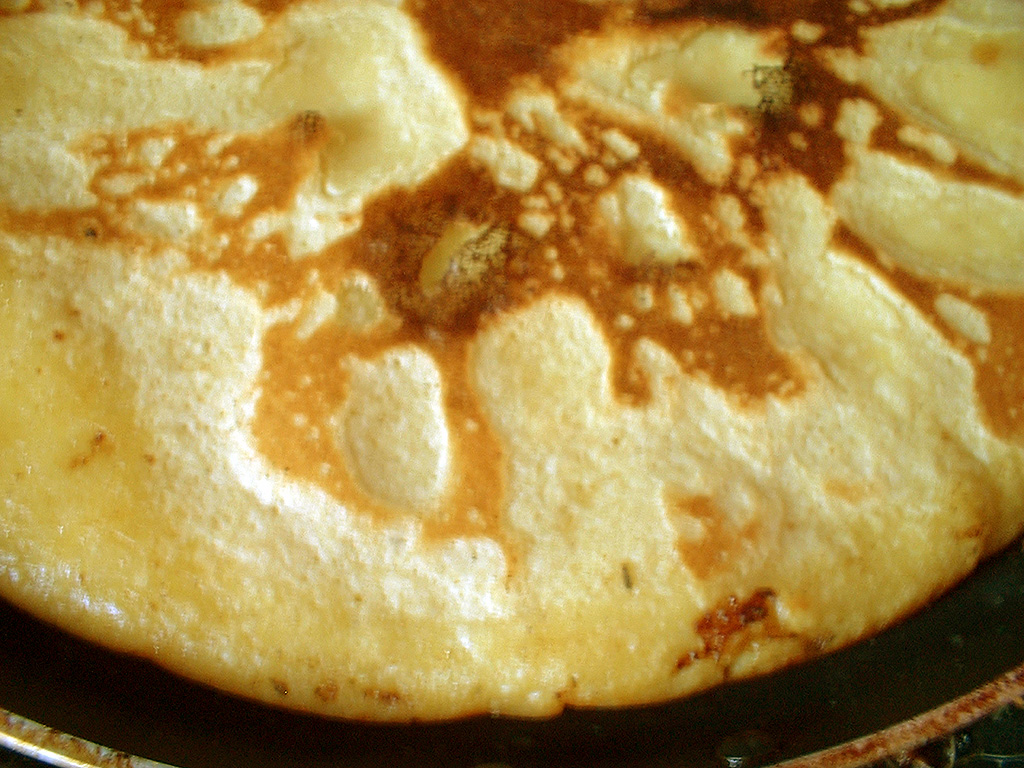 Golden farinata, to eat with your hands.
La Peyla (we call it "la Pejla") is the one close to my heart: the farinata I had practically under my house, on the corner of the old Agnesi factory, where I grew up. No fancy sign, an informal place, golden farinata and pan pizza at honest prices. It is the one I went back to without thinking, and where I send you if you want to eat well for the right money.
U Papa, in piazza Andrea Doria, is the best known: a historic sciamadda where farinata is eaten with a side of chard, the old way. Two things to know, from a local: they make it only in season, from autumn to winter, and in the evening they close early. If you come by in summer, you will probably find it shut or without farinata; don't say I didn't warn you.
A Sciamadda, at the end of an alley in the centre, is the real tradition: a 19th-century wood oven and the big round copper pans. Here farinata is the starting point, and from there you discover the vegetable pies and the other things of the sciamadda.
One last thing to reckon with. Farinata is a dish for the cooler months: in summer, with the heat and the ovens going full tilt for pizza, not everyone makes it. Always ask first, and if they have it, you are set. It is worth the queue, I promise.
Where to find it
- La Peyla (La Pejla)Golden farinata and pan pizza, informal and fairly priced. The neighbourhood farinata, on the corner of the old Agnesi factory.Oneglia (Imperia)
- U PapaA historic sciamadda, farinata with a side of chard, the old way. Only in season (autumn-winter), and it closes early in the evening.Piazza Andrea Doria 13, Oneglia (Imperia)
- A SciamaddaA 19th-century wood oven and big round copper pans; besides farinata, the green vegetable pies.Vico Costanzo 20, Oneglia (Imperia)