As a child, I hated the market. The heavy bags, the queue at the stalls, my mother stopping to talk to everyone. A bore. Today, when I go back to Oneglia, it is one of the things that relax me most: I wander around with no hurry, I look, I taste, I buy. Strange how things change.
In Oneglia the market is outdoors, in the squares behind the church of San Giovanni, right in the centre, on Wednesday and Saturday morning. They are the same squares where in late June the procession of San Giovanni passes, and a few steps away there is Blengini's bakery: the heart of Oneglia is all here.
What it means to go has changed too. Once, shopping at the market was a sign of someone who couldn't afford the shop, food for simple folk. Today it is the opposite. At the supermarket fruit and vegetables have lost their flavour, and shopping at the stall has become a choice: the wish to eat well, to eat food with taste. In Imperia, to be fair, even the supermarkets draw heavily on local growers, they are lucky. But the farmer's stall is another thing.
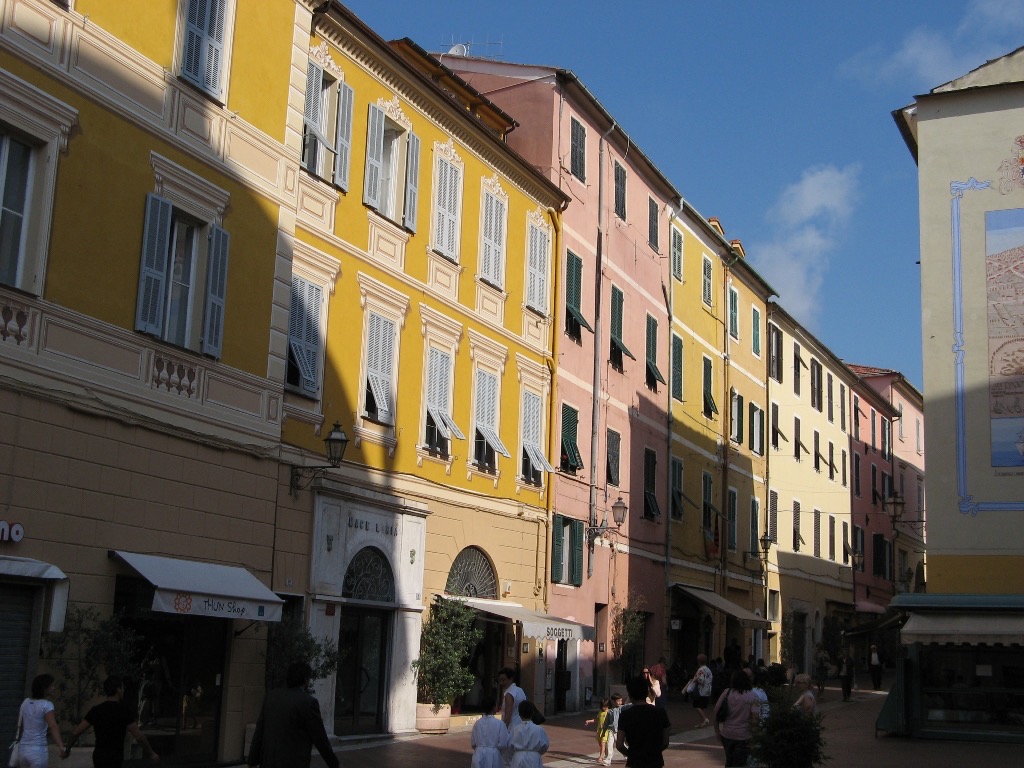 Via San Giovanni, in the centre of Oneglia: this is where, behind the church, the market is held on Wednesday and Saturday.
And here I get to what I always say to people from elsewhere. I live in Lombardy, and up there fruit and vegetables often have that flat, fridge taste. Here, no. A tomato tastes of tomato, basil fills the kitchen with scent just by carrying it home, a peach in summer you remember. It isn't an emigrant's nostalgia: it is that the produce comes from the valleys right behind, picked the day before.
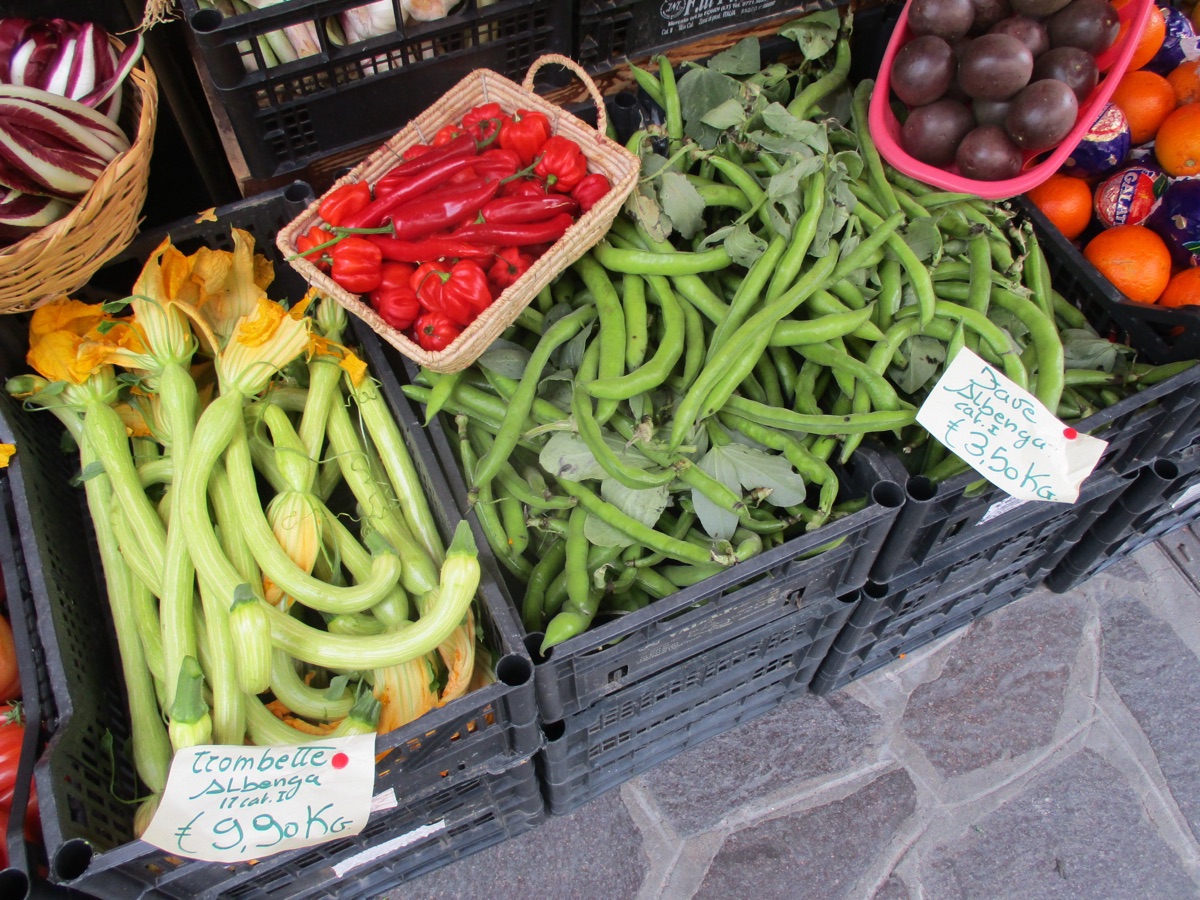
What you find changes with the seasons, and it pays to be led by it. In spring the broad beans, to shell raw with cheese — or better still with salame, which is the pairing here — or to pound into marò with mint, and the spiny artichokes, small, good even raw. Broad beans, in my family, are my father's thing: he is mad for them, and the memory I have of him is in spring, on the sofa watching the football, getting up in the middle of the first half to fetch a handful of broad beans and munch them raw, pod after pod, as if they were crisps. In summer the trombette, the umbrella-handle courgettes we love more than any other here: firm, sweet, so good you eat them raw, and with the flowers you make fritters. That they are another thing entirely from ordinary courgettes, let me put it this way: my daughter Emma won't touch courgettes, but when she sees trombette she goes wild. And children, on these things, do not lie.
Beside them, salad tomatoes, real small-leaf basil, chard and field herbs for the green pies, because here vegetables don't get thrown away. In autumn pumpkin, mushrooms and chestnuts from the valleys; in winter, citrus.
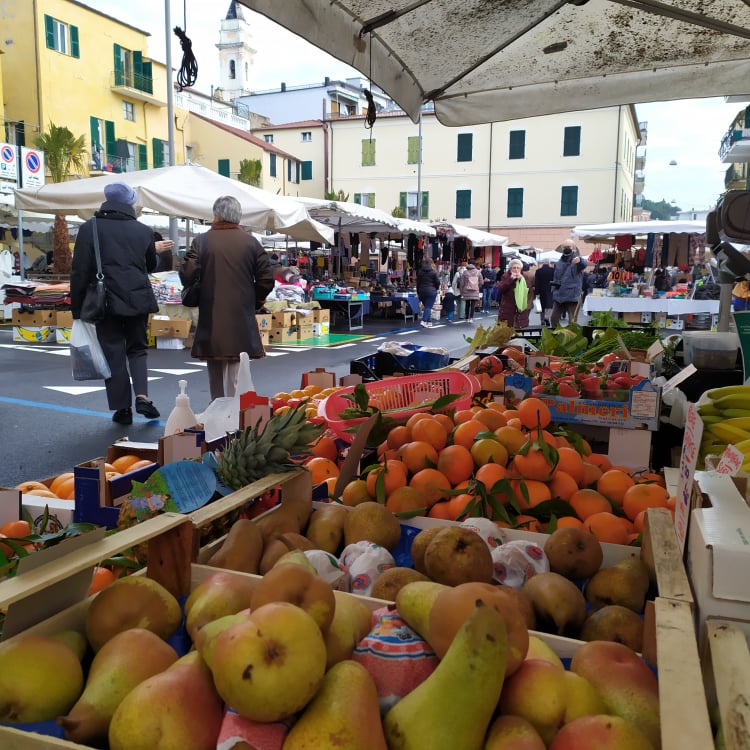 A fruit stall in the squares of Oneglia: pears, oranges, a pineapple in the foreground and, behind, the bell tower of San Giovanni rising over the market.
Behind the stalls, often, there they are: the growers come down from the valleys with the morning's crate. People who tell you how to cook what they sell, and who, if you ask "is it good?", don't spin you a tale. It isn't a supermarket: it is a place where you chat, you taste, you come back to the same people every week.
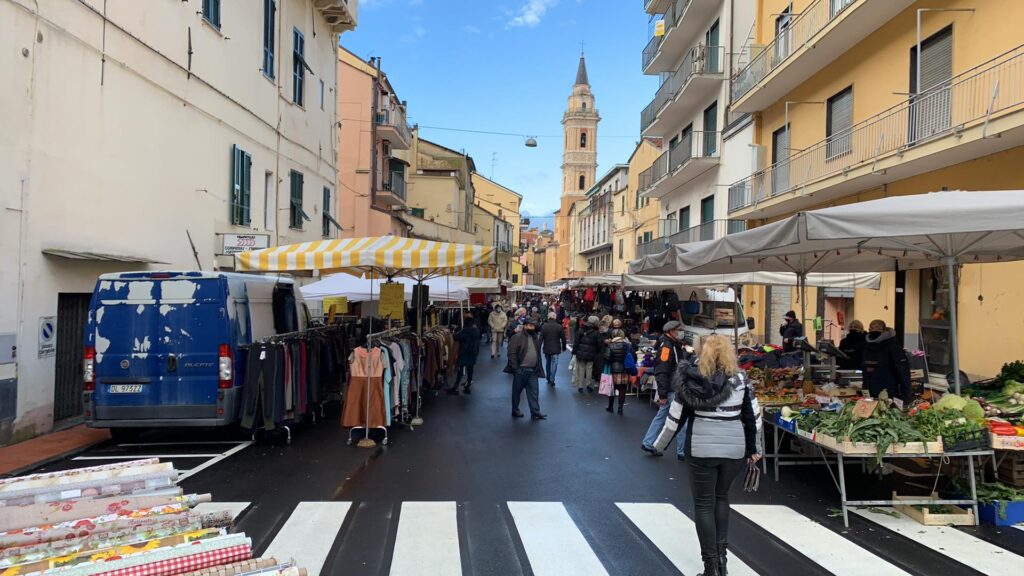 Oneglia's market on a morning in the heart of town: the stalls down the street, people doing their shopping, vegetables on the stall to the right, and the bell tower of San Giovanni as a backdrop.
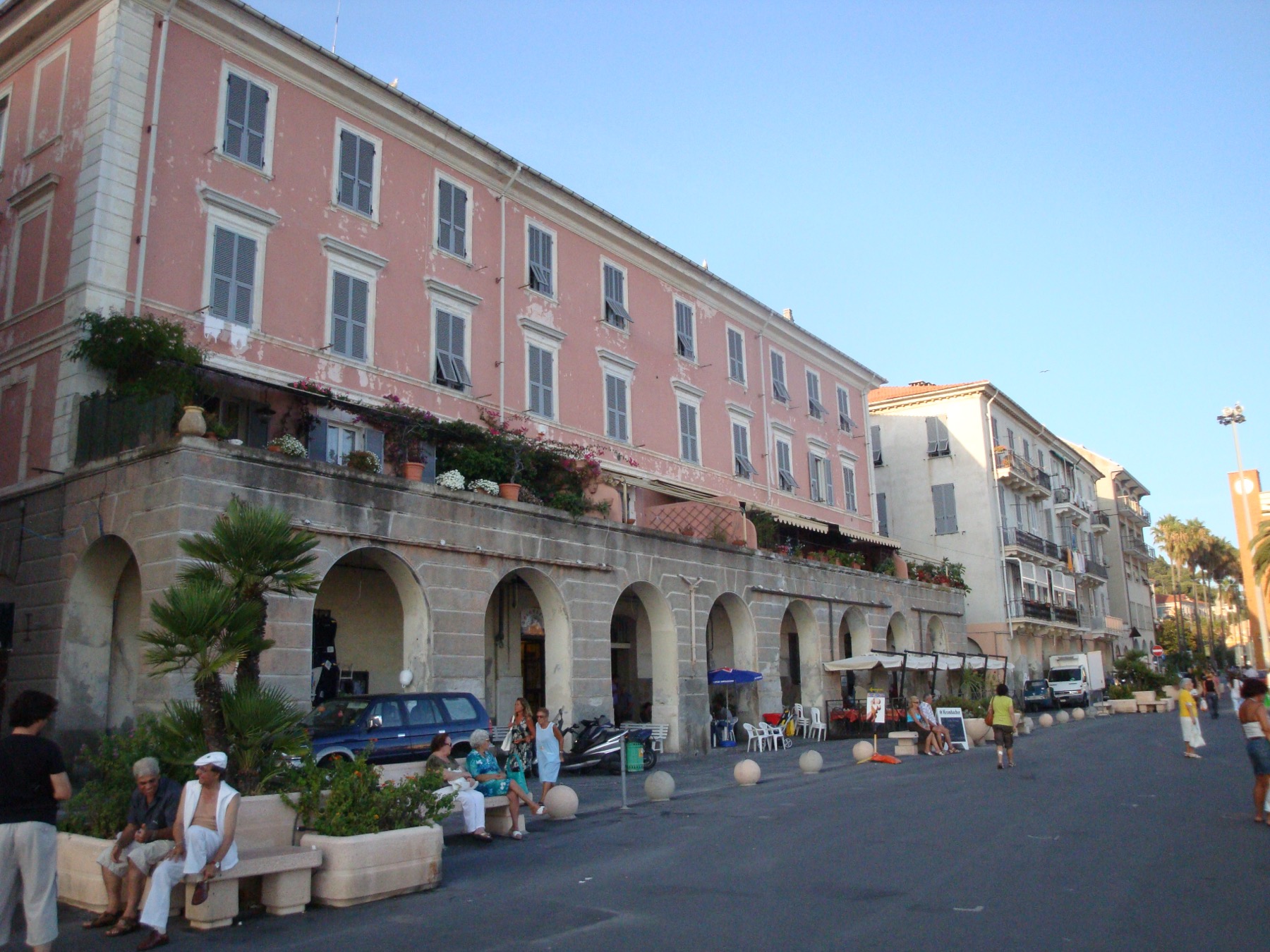 The porticoes of Calata Cuneo, on the port of Oneglia: a few steps from the market, the other face of the centre.
If you are staying at Stella sul Mare and feel like cooking, this is where you come: the basil for the pesto, the vegetables for a pie, the fruit for the beach. A bag, a Wednesday or Saturday morning, and you take home the Ponente, the one that still tastes of something.
Where to find it
- Oneglia's marketLocal fruit and vegetables, from the growers of the valleys. Wednesday and Saturday morning, outdoors, in the squares behind the church of San Giovanni.Centre of Oneglia (Imperia)