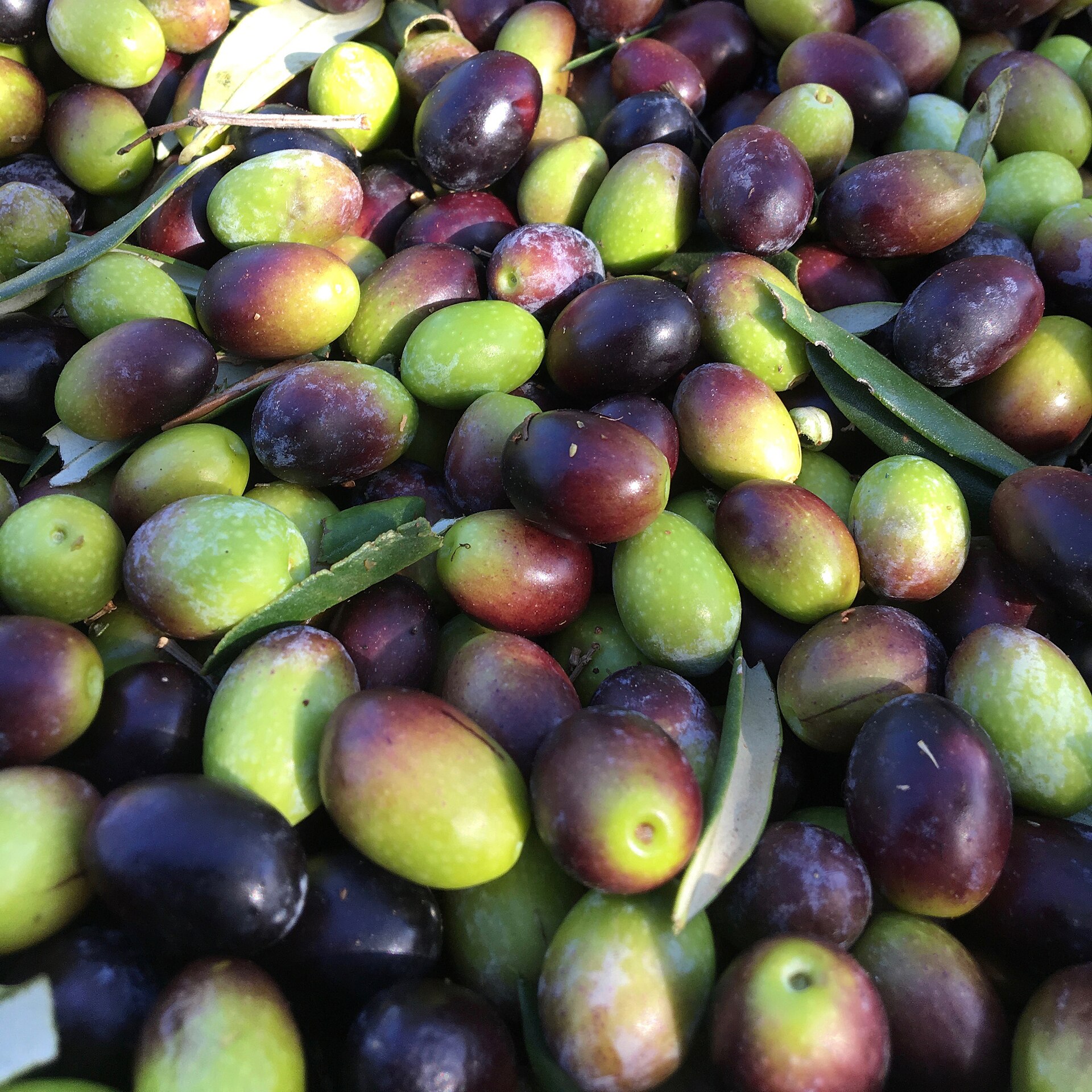
There's a colour that, in November around here, stays in your eyes: the green of the new oil running from the press. It isn't yellow, it's grass green, and it smells of artichoke and pine nut. It is the oil of the taggiasca olive, and it has a history more than a thousand years long.
It was the monks who brought it here. Between the 7th and 8th centuries the Benedictine friars settled in the Argentina valley and built their monastery at Taggia. They were the ones who grafted these hills' wild olive with the cuttings carried from the abbey of Cassino, and who drew the slopes with terraces, the maixei: the dry-stone walls that still today hold up the little soil wrested from the mountain. That art of building them without a drop of cement is UNESCO heritage.
The taggiasca olive is small and dark, and the tree that bears it can live six hundred years: some of the olives you meet climbing the valleys were already there before Columbus. The oil it gives is among the most delicate in the world, low in acidity and fragrant; since 1997 it has been a DOP, the «Riviera Ligure», and its zone is the province of Imperia. It's no accident that Imperia wants to become the capital of oil: here too is the Fratelli Carli Olive Tree Museum, which tells the whole story, from the Roman press to the enamelled tins.
But the thing that matters for you, on holiday, is another: here good oil isn't bought at the supermarket. You buy it by the tin, from the mill or the farmer, and it lasts all year. It's the same oil they pour on your bread in the osterie, the one that makes a basket of focaccia vanish before the courses even arrive. And it's the oil you need for the pesto, for the farinata and for the trombette frittata: without it, they're not the same.
If you pass through Stella sul Mare in autumn, get someone to take you to a mill when they «make the oil»: the green of that stream, and the scent, you won't forget. And if you want to take that oil home, I'll tell you where to buy it.
Where to find it
- Olive Tree Museum «Carlo Carli»The whole story of oil and the olive tree, told by Fratelli Carli. Lovely even on a rainy day.Via Garessio 13, Imperia (Oneglia)