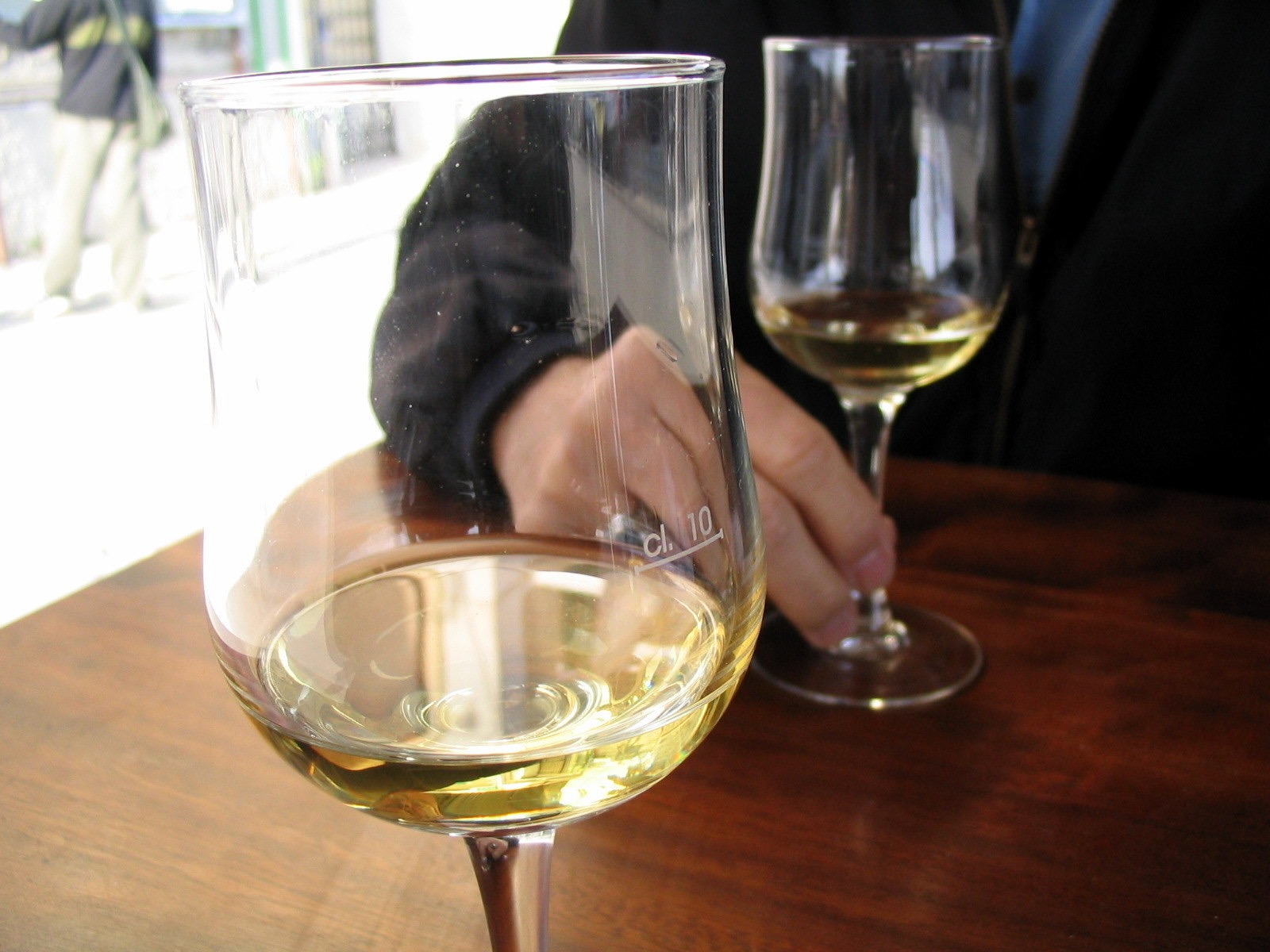
Let me start with a confession: Pigato is my favourite wine. Not one white among many, the one, the wine I look for when I come home and the one I put on the table when I want someone to understand where I'm from. So make yourself comfortable, because on this I'm not remotely objective.
Let's begin with something that throws everyone: Pigato and Vermentino, genetically, are the same grape. Same DNA. And yet in the glass they're two different wines, and here on the Riviera nobody would dream of confusing them. Like two brothers raised in the same family but in two different houses.
The land makes the difference. Vermentino prefers to stay near the sea, and what comes out is a gentler wine: floral, citrusy, fresh, easy to love at first sip. Pigato instead loves the heights, the terraced strips wrested from the hillside, and there it turns more intense and more savoury: Mediterranean-scrub herbs, mint, sage, and that undertow of salt that lingers. Even the berries differ: Vermentino keeps them yellow, Pigato finds itself with them mottled, amber, as if freckled. That's where the name comes from, from «pigau», spotted.
They are the whites of the Riviera Ligure di Ponente, our DOC (Pigato has had it since 1988). Wines of steep hills, of dry-stone walls, of farmers who made wine the way they made oil: first for the house, then for whoever passed by. Drinking a Pigato here isn't drinking just any wine, it's drinking the landscape.
Why do I love it so much? For that salt. Pigato isn't a wine that caresses you, it's a wine that wakes you up. I want it cool but not ice-cold, in a glass that isn't too small, and at the first sip I want to taste the scrub and the rock. I like that it's never dull, that it changes from hill to hill, that it tastes of a precise place. It's the least «supermarket» wine I know, and that's exactly why I love it.
At the table, Pigato was born for the cooking of here. On pesto and trofie it's unbeatable, and on pansoti in walnut sauce too. It stands up to grilled fish, to cappon magro, to serious raw seafood, and with that structure it copes beautifully even with white meats and rabbit. Vermentino, leaner, I keep for the aperitivo, for delicate raw plates, for evenings when I just want something light.
But if I had to name a single pairing, one that is pure Ponente, it's this: Imperia's focaccia and Pigato. The focaccia here is tall, oily in the right measure, salty; Pigato is savoury and fresh. They chase each other. A piece of focaccia just bought and a glass of Pigato mid-afternoon, with the sea in front of you, is to me one of the most Ligurian things there are. And it costs two euros.
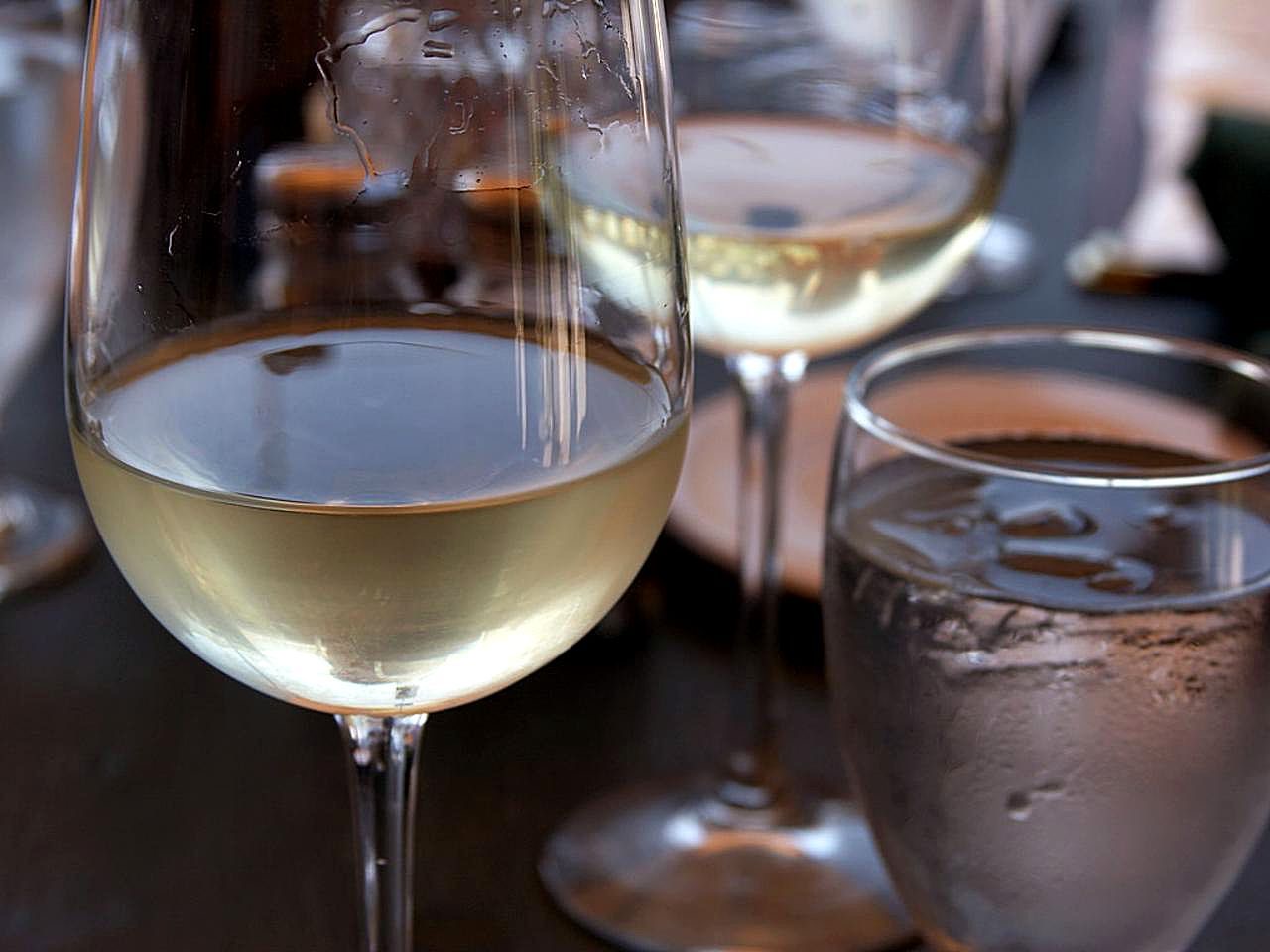 A glass of Ponente white, cool but not ice-cold: that's how I want it
And now the practical part: where to buy it, ideally straight from the cellar, which is the right way. You taste, you talk to the producer, you understand the vintage and you pay a fair price. My favourites are below, and I'll give them to you in order of heart.
Number one, for me, above all, is Laura Aschero, in Pontedassio: a small family estate, a Pigato exactly as I want it. Then there's Fontanacota, up in Pornassio, which besides the whites also makes Ormeasco. And to the west, in Sanremo, Calvini. Go, get a taste poured, take home a few bottles: it's the best souvenir you can make around here, far better than a fridge magnet.
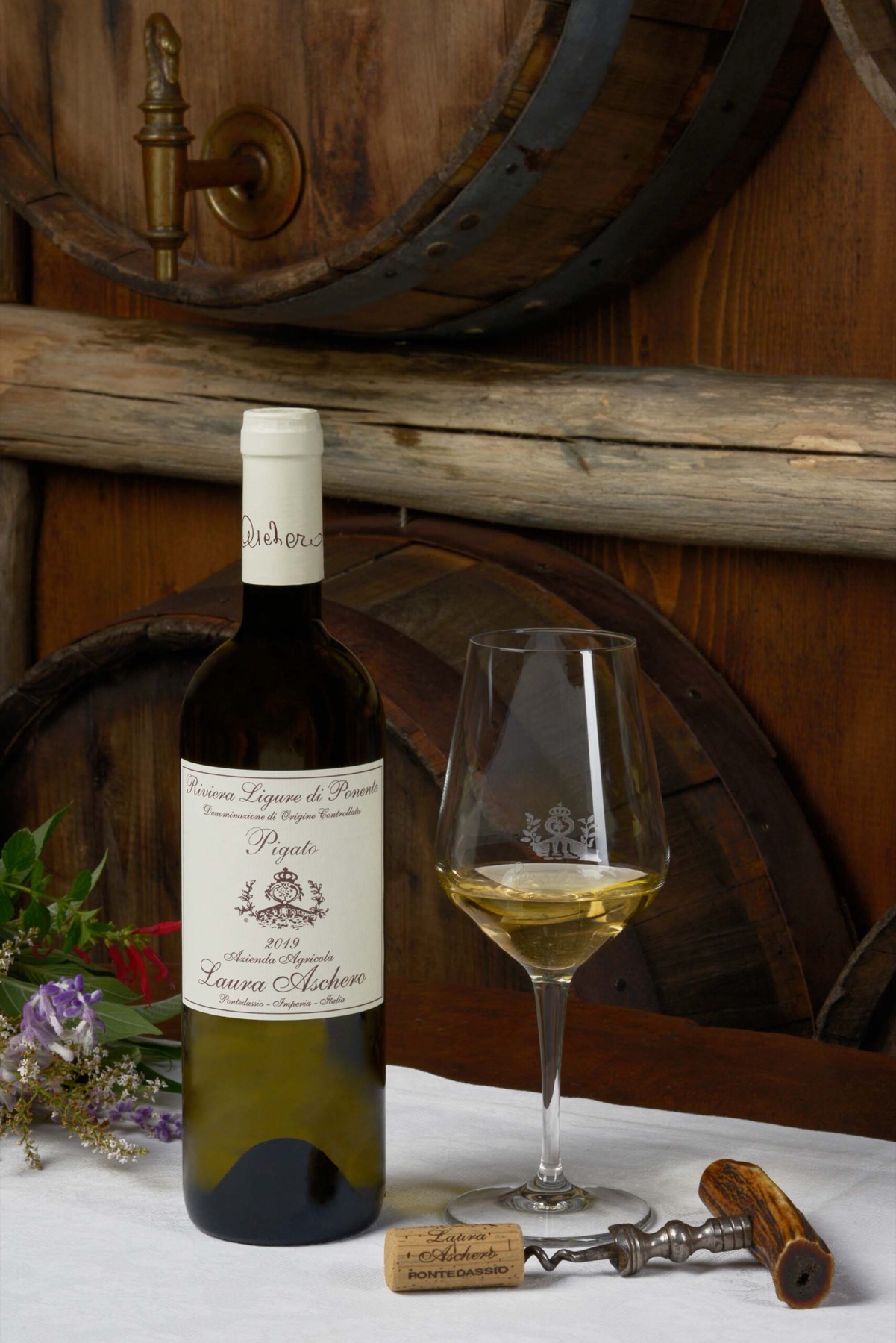 Laura Aschero's Pigato, in Pontedassio: my number one, to taste in the cellar
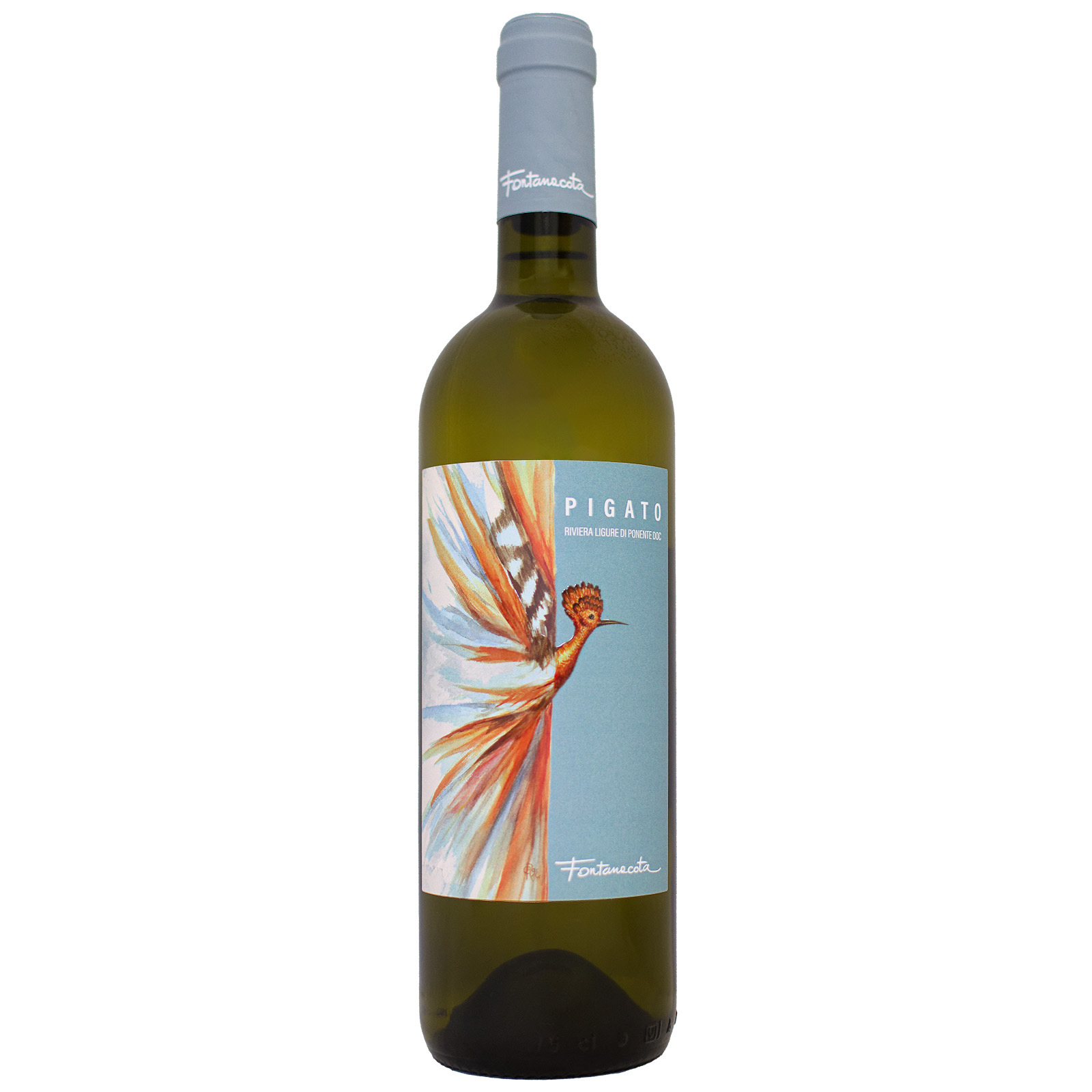 Fontanacota's Pigato, from Pornassio: unmistakable, with its hoopoe on the label
If you're at Stella sul Mare, the advice is just one: a bottle of Pigato in the fridge, some focaccia from the market, and your Ligurian holiday is already halfway there.
Where to find it
- Laura AscheroMy favourite, above all. A small family estate: textbook Pigato, Vermentino and Rossese. Direct sales at the cellar.Pontedassio (Imperia)
- FontanacotaHillside Pigato and Vermentino, and the Ormeasco di Pornassio (the mountain red).Pornassio (Imperia)
- CalviniPigato and Vermentino, towards the west.Sanremo (Imperia)