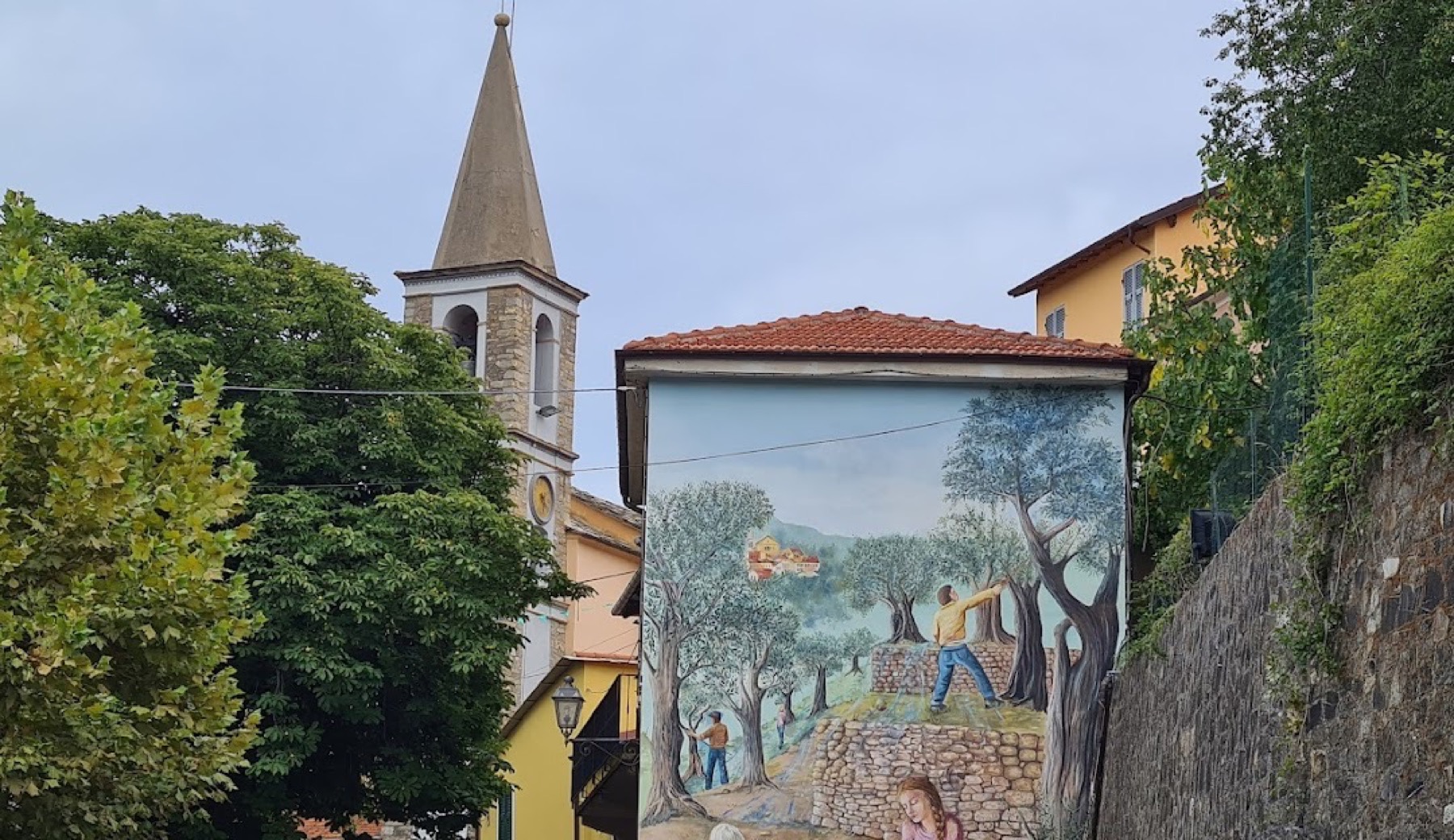
Let me get this out of the way first, so we're clear. Every time I hear the name Valloria, the first thing that comes to mind isn't the doors, or the alleys, or the oil. It's a slogan. «A Valloria fai baldoria» — roughly, «at Valloria you have a blast». It rhymes in Italian, and it's been stuck in my head forever, since I was a kid and that festival poster did the rounds around Imperia. Even now, if someone says «let's go to Valloria», my first reaction is to laugh and fire back the rhyme. But then you actually go, and you realise the place is worth far more than the wordplay.
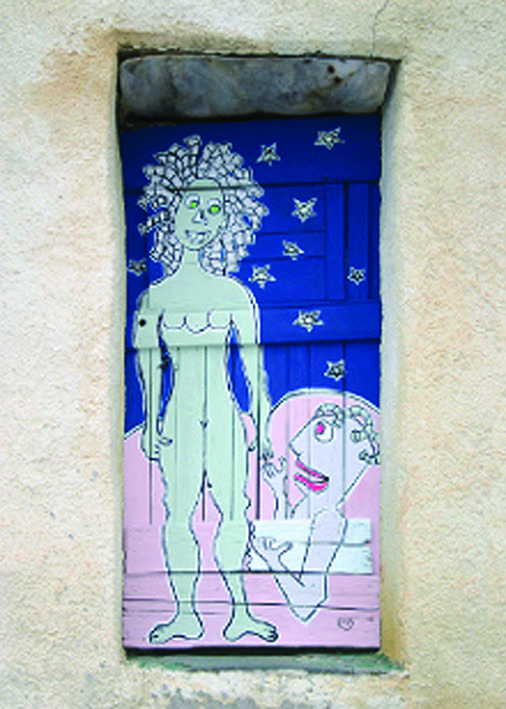 One of Valloria's painted doors: stylised figures and stars on a wooden door set into the stone
Let me clear up one thing right away, because there's some confusion out there. Valloria is not a hamlet of Dolcedo, as you often read: it's a frazione of the Comune of Prelà, up in the upper Prino Valley. You drive through Dolcedo to get there, and that's exactly what makes the trip nice, but the village itself sits higher up. It's a tiny place: the real residents, the ones who live there all year round, are just over thirty. Thirty-four, they say. A handful of people in a stone village that once counted hundreds, before the backcountry emptied out and folk went down to the valley floor or to the sea.
And here comes the story that makes Valloria different from every other depopulated village in the Ponente. In the 1990s a group of locals — the «Amici di Valloria» association, the Tre Fontane people, founded in '91 — decided not to let the place die. The idea was simple and a little mad: invite artists to paint the doors. Not the façades, not the walls: the doors. Those old wooden cellar, stable and storeroom doors that, in a farming village like this, are everywhere. They started around 1994, with about seventy doors. Since then, every summer, painters have come up from all over Italy and from abroad too, and the number has grown year after year. By 2016 they'd hit a round one hundred and fifty; today the village's own website counts one hundred and sixty-seven.
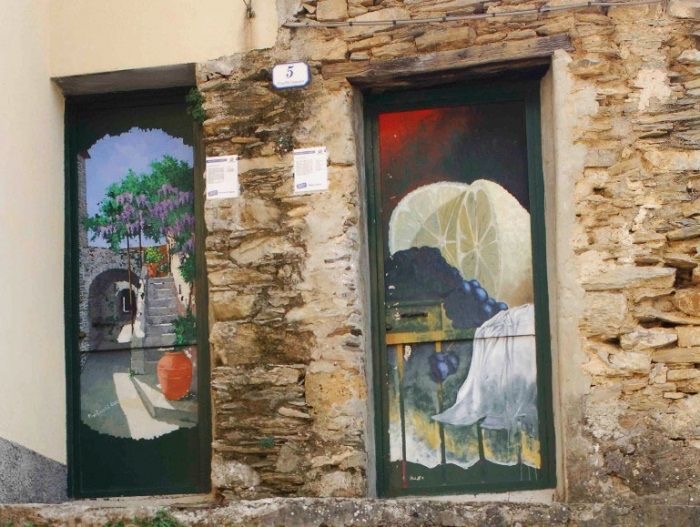 Two painted doors side by side on a bare stone wall, with the house number: a country landscape and a still life
Walking through it is a strange experience, in the good sense. You turn into a narrow alley and there's a door with a sailing ship on it, you round the corner and there's one with a face, one with fish, one with a country scene, one abstract that you don't understand but like anyway. They're right there, out in the open, day and night, no ticket and no opening hours: a museum that never closes, except that instead of rooms it has lanes. I'll be honest with you, it's one of those things that works better in person than in a photo — everyone takes the photos, but it's by walking through it that you realise how many there are and how they pop up where you least expect them, round a bend, above a few steps.
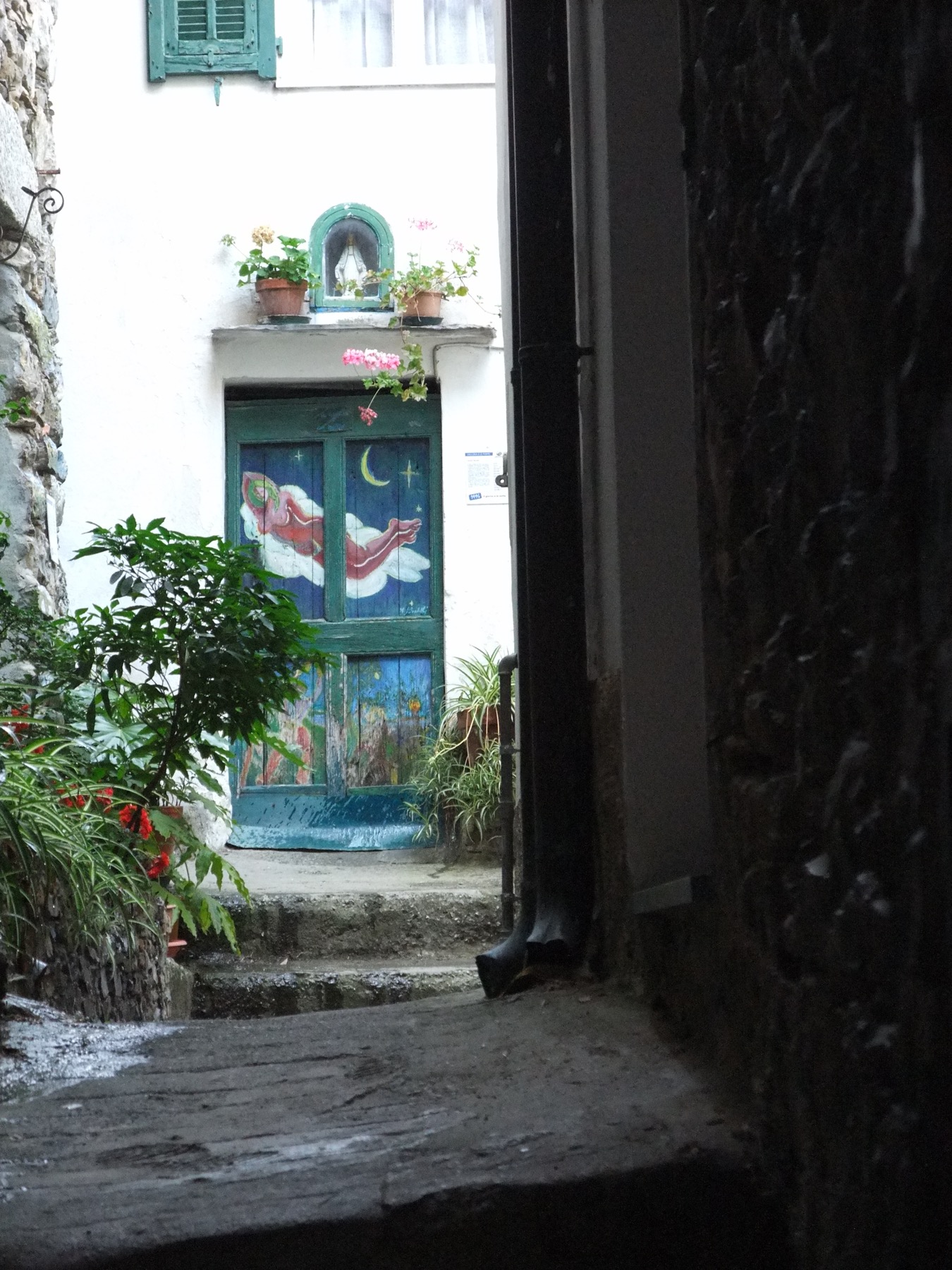 A glimpse of the village: a shaded alley opening onto a painted door, with a votive niche and geraniums
Now the honest part, the practical one. Valloria is about fifteen kilometres from Imperia, but they're fifteen kilometres of Ligurian backcountry, not motorway. From the Imperia Ovest exit you head toward Dolcedo, drive through the town, then climb toward Molini di Prelà and Valloria. The road is the typical one for these valleys: narrow, full of hairpins, the kind where if you meet someone coming the other way one of you has to back up. Nothing dramatic, but if you're used to the straight roads of the plains, allow a few extra minutes and take it easy. Don't expect big car parks: it's a small village, you leave the car wherever you can find a spot at the entrance and inside you get around on foot only — the alleys wouldn't let you do otherwise anyway. My honest advice is don't go on festival days if you're after peace and quiet, and do go on festival days if you're after the opposite.
Because then there's the festival itself, the one from the poster that's lived in my head a lifetime. «A Valloria fai baldoria» isn't just a joke: it's the name under which the village comes alive in summer. There are two dates, usually the first weekend of July and the first weekend of August, and it's the classic village sagra done right — the kind where you eat sitting at long tables, in the middle of everyone, with the local dishes. The piattone di Valloria, pasta all'ortolana or with pesto, zemin (the chickpea and chard soup), trippa alla valloriese for the brave, skewers, sausages, braciole, vegetables from the garden and grandma's cakes to finish. Simple food, cooked by people who've made those dishes forever, in the place where they were born. It's also the time when the artists often paint the new doors, so if you happen to be there on those days you see it all at once: the museum growing and the party that keeps it alive.
If you're at Stella sul Mare and one morning you feel like leaving the sea for a few hours, Valloria is the right trip for anyone after something different from the usual beach. Pair it with Dolcedo, which is on the way: drive up, stop at the Benza oil mill for oil and preserves, then carry on up to Valloria for the doors. And if you want to round off the trip at the table, I've already told you where to eat well up in the valleys. One thing I do wish for you, though: go at least once on the right weekend, so that daft slogan ends up stuck in your head too.
Where to find it
- ValloriaThe village of painted doors: a hamlet of the Comune of Prelà, in the upper Prino Valley, about 15 km from Imperia. Just over 30 residents and 167 cellar, stable and storeroom doors painted by artists from across Italy and abroad (the initiative began in the early 1990s). Free to visit, on foot, day and night. Narrow hairpin road: take it slow and leave the car at the entrance to the village.Valloria, Prelà (Imperia)
- «A Valloria fai baldoria» festivalThe village sagra, usually the first weekend of July and the first weekend of August. Local dishes at long tables: piattone di Valloria, pasta all'ortolana or with pesto, zemin, trippa alla valloriese, skewers, sausages, braciole, garden vegetables and cakes. On those days the artists often paint the new doors too.Valloria, Prelà (Imperia)