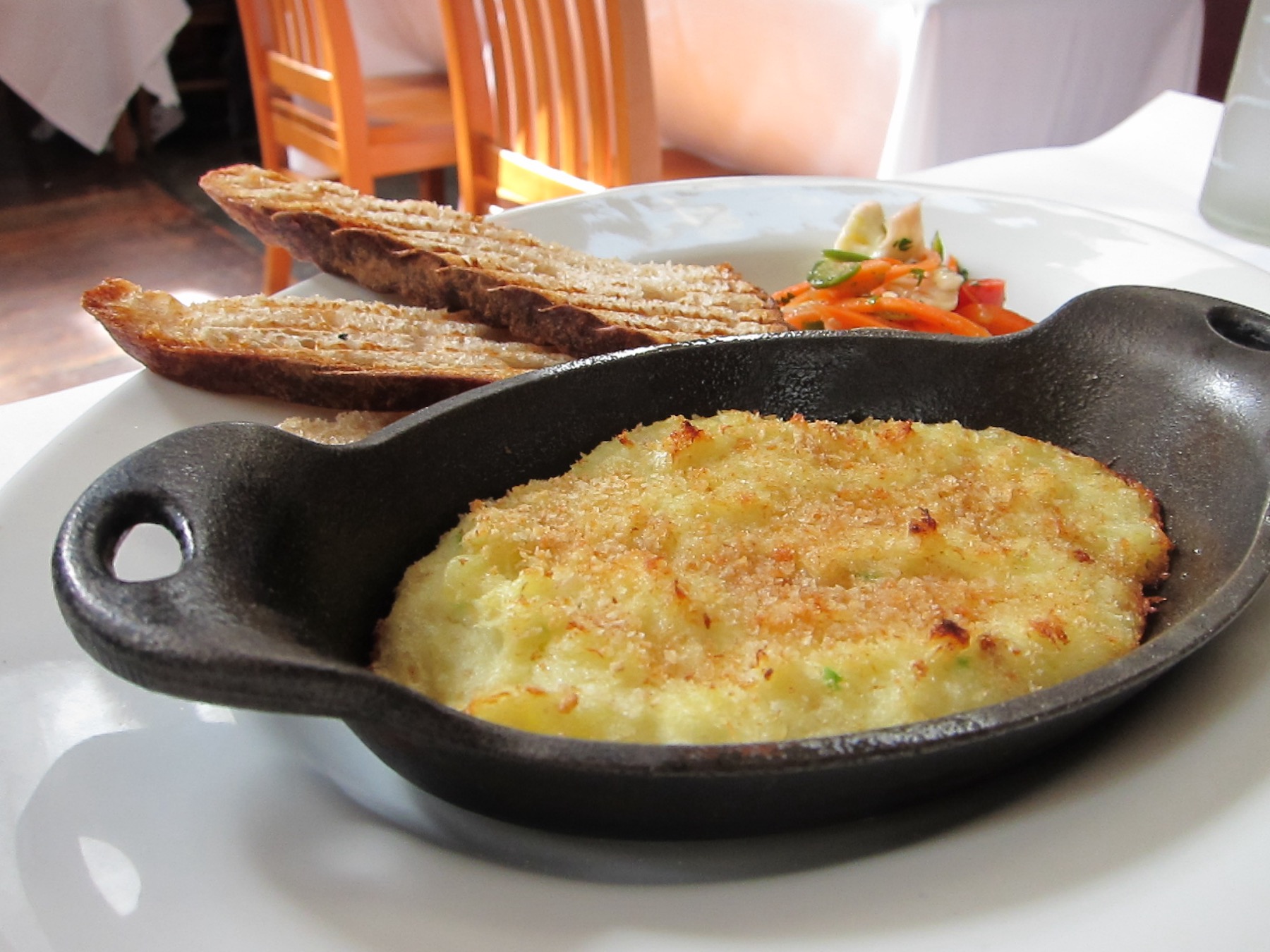
There's a dish, around here, that's named exactly after the gesture you make to cook it. It doesn't tell you what's inside, it doesn't tell you where it comes from: it tells you what to do with your arms. It's called brandacujun, and before you even eat it, it needs explaining.
Let's start with the name, because that's half the fun. "Brandare", in the Ligurian dialect, means to shake. The word comes from the Provençal "brandar", which means the same thing, and that's no accident: we're a step away from France, and certain words crossed the border before we did. The dish is a salt cod creamed by shaking the pot hard, and the name tells you exactly that.
And the "cujun"? Here the versions split in two, and both make you smile. The one you hear most says that the creaming, a long job of pure arm, was handed to the least sharp member of the group: the only one who couldn't be trusted with anything better than shaking the pot. The other version, ruder, says that the shaking was done by the man of the house, sitting down, and that as he shook the pot between his legs he made it bang against his lower parts. Let's just say the name earned itself in the field. When I tell guests, I stop right here and let them imagine.
That said, brandacujun is a serious thing. It's a recognised Traditional Agri-Food Product, and its homeland is exactly this: the Liguria of Ponente, from Sanremo to Imperia and on to Isolabona and up into the inland valleys. It's not a generic "Ligurian" dish: it's a dish of our own home. So much so that you find it starring at the two festivals that matter around here, the Stoccafisso Festival of Badalucco and, here in Oneglia, the Festa di San Giovanni, where at the Ineja Food stalls they serve it to you hot while you watch the harbour.
Now, where it comes from. Stoccafisso is cod dried in the northern wind, and ships were bringing it to Genoa as far back as the 1400s, when the Republic traded with half of Europe. But the brandacujun you eat today isn't as ancient as it seems, and here's something few people know: there were no potatoes. For centuries it was just boiled salt cod, shaken with oil and herbs. The potatoes arrived at the beginning of the 1800s, when they started making their way into kitchens, and from then on they became part of the dish. If you want to taste the "grandmother's grandmother" version, try it without: it's another thing entirely, drier, more of the sea.
The real recipe is almost insolently simple. You boil the soaked salt cod and the chopped potatoes together, in the same pot. When the potatoes are soft and the fish flakes, you drain everything and, while it's hot, you patiently pick out the skin and bones. You leave the potatoes in big chunks; they break down on their own later.
Then comes the moment of the dish, the one that gives it its name. Put everything in the pot, add the finely chopped garlic and parsley, a generous dose of extra virgin taggiasca oil, and if you like a squeeze of lemon. And here you don't blend, you don't whisk, you don't use a food processor: you shake. Lid on top, and off you go with your wrist, from the bottom upwards, until the cod and potatoes fall apart and bind into a rough cream. It's a job for the arm, and that's how it should be: if you don't shake it, it isn't brandacujun, it's fish mash.
You don't joke about the oil. Here we use the taggiasca, sweet and never aggressive, because the salt cod is delicate and an oil that's too bold would cover it. The oil is the real seasoning of the dish, not a detail: you put in plenty, raw, even at the end on the plate. If you want to know where to get the good stuff, I've already gone into it properly: around here you're spoilt for choice, and that's the truth.
On the additions, everyone has their own school. Some throw in a few taggiasca olives and a handful of pine nuts at the end of creaming, the same hand as the Oneglia-style stockfish, which is the richer, stewed cousin of this dish. Some keep the lemon bold, especially towards Sanremo. And some, like in Imperia, go heavier on the oil and lighter on everything else. There's no right version: there's yours, once you've made it three or four times.
A tip from someone who knows it. Real salt cod needs to soak for two or three days, changing the water often, and it's a nuisance. Buy it already soaked from the fishmonger and you save yourself the long part: ask at the counter, they'll tell you which cut to take. And then don't be in a hurry to serve it piping hot. Brandacujun is good warm, but the next day, cold, it's even better: it's one of those dishes you carry to the beach in a container, with a bit of bread, and it's already lunch.
It's a poor dish that tells you everything: the northern sea the fish comes from, the oil of our hills, and a group of people around a pot, laughing at whoever they make shake it. Make it at least once, and you'll understand why we joke about it but won't hand it over to anyone.
- 1Boil the salt cod and the chopped potatoes together in lightly salted water for 30-40 minutes, until the potatoes are soft and the fish flakes apart.
- 2Drain everything and, while still hot, remove the skin and bones from the cod. Leave the potatoes in rough chunks.
- 3Finely chop the garlic and parsley and set them aside.
- 4Put the cod and potatoes in a pot, add the garlic and parsley, a generous amount of taggiasca oil and, if you like, a squeeze of lemon.
- 5Now you 'brand' it: lid on top and shake the pot hard, from the bottom upwards, until everything falls apart into a rough cream. No blender, no whisk: just your wrist.
- 6Adjust with salt and pepper, and if you want, fold in some pine nuts and a few taggiasca olives. Serve warm, with more raw oil on top.
Where to find it
- Pescheria u BalincioStoccafisso soaked properly, and advice from the counter on which cut to take. The starting point of brandacujun.Oneglia (Imperia)
- From 19 to 29 June, at the harbour stalls, you'll find brandacujun ready, made by the Committee volunteers. The most honest way to taste it before making it at home.Calata G.B. Cuneo, Oneglia (Imperia)