
There's one dish that in Oneglia is beyond debate. You find it on Sunday tables, you find it at the patron saint's festival, our elders reach for it whenever they want to say "this one is from our home". It's stoccafisso all'onegliese, and if any recipe tells the story of the neighbourhood, it's this one.
 Stoccafisso all'onegliese
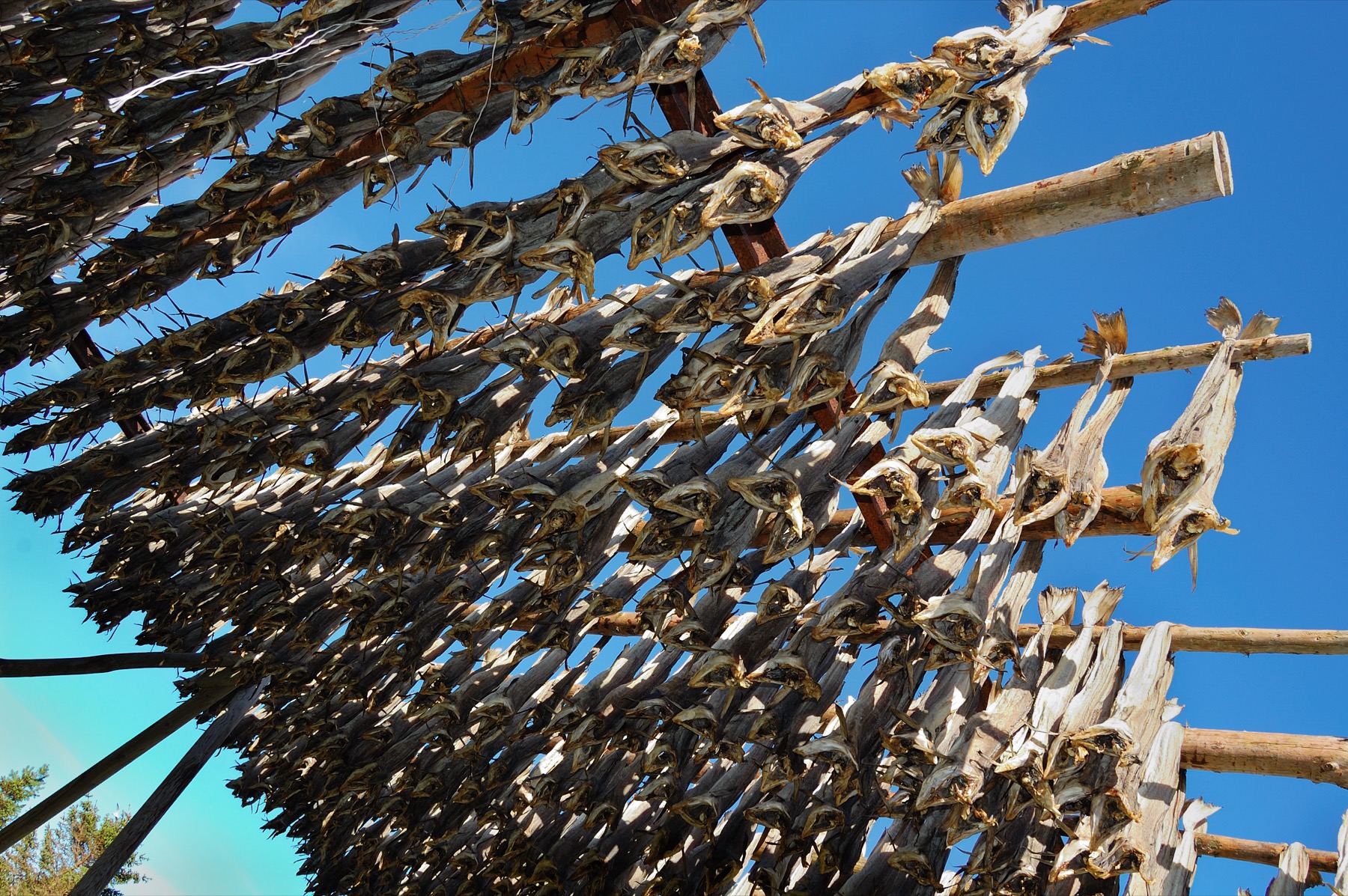
The first thing that throws outsiders is the main ingredient itself. Stoccafisso is air-dried cod, and it comes from very far away: from the Lofoten Islands, in Norway, where they hang it in the freezing wind until it goes hard as a stick. Think how strange that is: the dish that feels most ours, the one that in Oneglia they call home cooking, starts from a fish of the North Sea. But that's how it went across half of Liguria. The ships coming down from the north carried this cod that kept for months without spoiling, and a land of sailors like ours built a whole cuisine on top of it.
Around here we take it seriously. There's an Accademia dello Stoccafisso of the province of Imperia, and it's an offshoot of the Comitato San Giovanni e Tradizioni Onegliesi, the same people who run the Ineja festival. It's no accident. Stoccafisso and San Giovanni are the same thing: at the patron saint's festival, at the Ineja Food stands, it's one of the dishes people queue up to eat. The town has even given it a municipal designation, one of those plaques meant to say "look, this one is made a certain way, and you don't get to change it on us". What the right way actually is, mind you, is a matter people will argue about for hours, and argue they do.
Let's start at the beginning, which is the dull but decisive part: the soaking. Dried stockfish has to sit in cold water for two or three days, with the water changed a couple of times a day, until it turns soft and swollen again. It's a nuisance, I know. That's why my advice is simple: have it given to you already soaked. At the pescheria u Balincio, down on the port, you find it ready, and the most thankless job is off your hands. Once soaked, you clean it of skin and bones and cut it into good big pieces, because in cooking it softens and tends to fall apart.
Then comes the heart of the matter. In a pot, earthenware if you can, soften a thinly sliced white onion in a good splash of oil. Slowly, without burning it, it has to turn sweet and almost creamy. Into this you melt a couple of salted anchovies, which will never taste like anchovies but will give depth and savour to everything. And here comes the Oneglia signature: pine nuts and walnuts. Both of them. It isn't a whim, it's the sign that you're in Oneglia and not somewhere else. The walnut kernels especially are that slightly mountain, slightly earthy touch that ties together a dish of the sea. You let them flavour the oil along with the pine nuts, and from that smell alone you know you're on the right track.
At this point the pieces of stockfish go in. You brown them lightly, deglaze with half a glass of dry white wine, let it evaporate, and then add the Taggiasca olives with a little of their brine. The small dark Taggiasca olives, mind you, the real ones from the Ponente: tiny, but with a soul. Cover just to the level with water, drop the flame to a minimum and begin the long cook.
And there's no skipping it: it takes at least two hours. Stockfish is stubborn, it wants time to give in and turn tender. There's a golden rule for the whole cook: don't stir with a spoon. Ever. If you turn it over, the fish breaks and you end up with mush. You shake the pot, with both hands, the way you do with farinata when you turn it. Movement, not a spoonful.
The potatoes go in during the last hour, cut into chunks. They cook inside the sauce, soak it up, and when they're soft they've taken on all the flavour of the fish and the olives. Only then do you taste and adjust the salt, because between the stockfish, the anchovies and the olives there's plenty of salt already, and it's easy to overdo it. At the end, off the heat, you let it rest ten minutes, then a handful of chopped parsley and a thread of our Taggiasca olive oil raw, which closes the circle.
On the correct version, as I said, people argue. The purists of Borgo Peri, the old Oneglia fishermen's quarter, swear the walnuts have nothing to do with it, and that the real recipe is plainer: stockfish, onion, pine nuts, olives, potatoes, full stop. Others add tomatoes and make a redder sauce. I'm telling you the one I grew up with, pine nuts and walnuts together, and if you call on another Oneglia family they'll probably tell you theirs is the only blessed one. That's the beauty of it, it's a dish everyone holds tight.
If you love this slow, humble cooking of the sea, know that it has a quicker sister: brandacujun, stockfish again, but whipped with potatoes until it turns into a cream. That one I'll tell you about another time, because the name alone is worth a chapter.
Stoccafisso all'onegliese is not a dish to rush. Put it on a rainy Sunday, let it murmur away while you do other things, and eat it warm with bread to gather up the sauce. Better still, make extra: the next day it's even better, because the flavours, after a night's rest, grow fonder of one another.
- 1If you start from dried stockfish, soak it in cold water for 2-3 days, changing the water twice a day. Easier still: have the fishmonger give it to you already soaked.
- 2Clean the soaked stockfish: remove skin and bones and cut it into large pieces, a mouthful or so each.
- 3In a big pot, ideally earthenware, gently soften the thinly sliced onion in a good splash of oil. No rush, it has to turn sweet.
- 4Add the chopped anchovies and let them melt into the oil. Then stir in the pine nuts and walnut kernels and let them flavour the oil for a couple of minutes.
- 5Add the pieces of stockfish, brown them lightly, then pour in the white wine and let it evaporate.
- 6Add the Taggiasca olives with a little of their brine, cover with water just to the level of the fish, lower to a minimum and cook covered for about an hour and a half. Never stir with a spoon: shake the pot, or the fish falls apart.
- 7Add the potatoes cut into chunks and carry on for another hour, until they are soft and the sauce has reduced. Season with salt only now, because the stockfish and anchovies are already salty.
- 8Turn off the heat, let it rest for ten minutes, then add chopped parsley and a thread of raw oil. Serve warm, with bread to mop up the sauce.