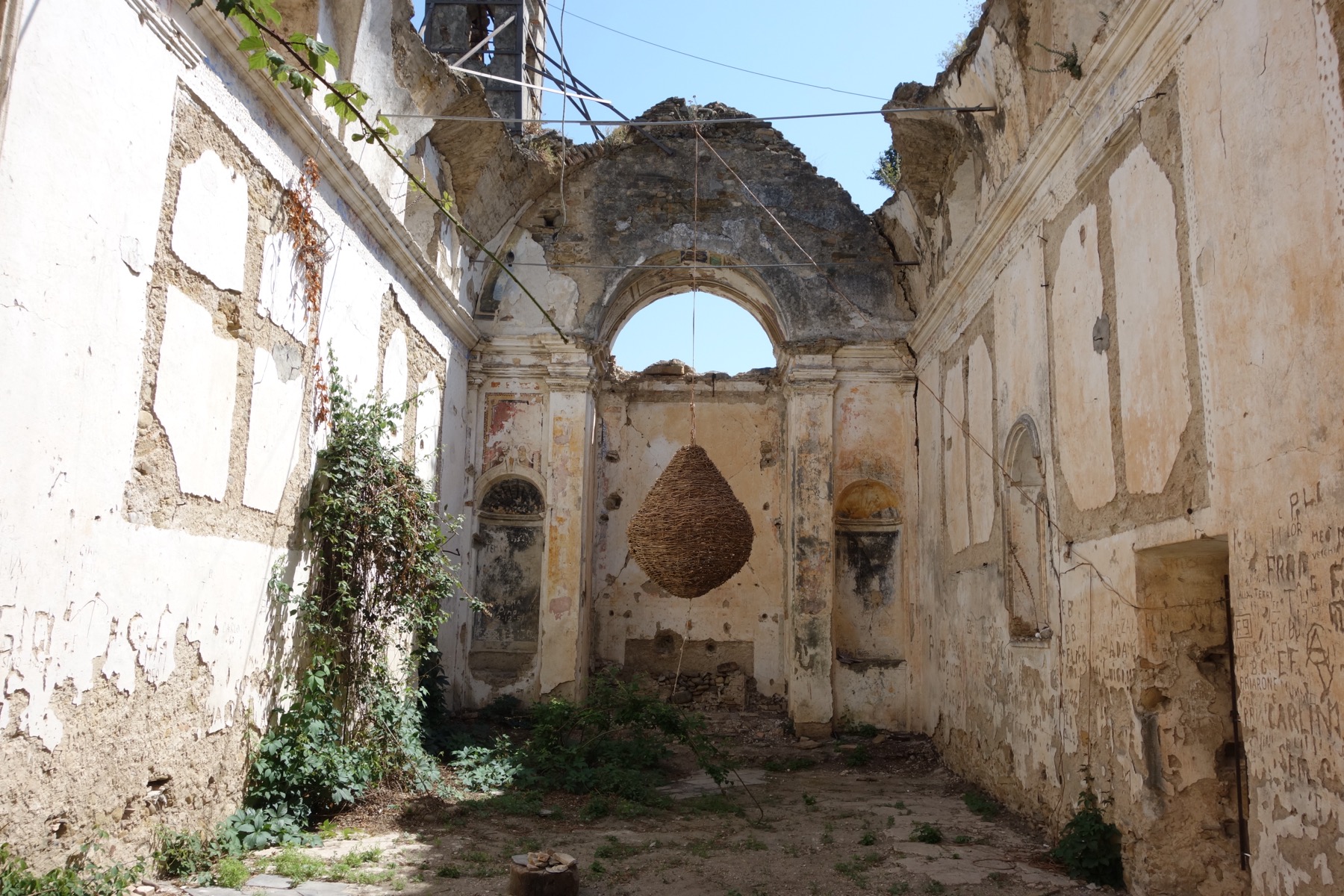
Bussana Vecchia isn't the first place I send people who stay with me. There's no beach, no postcard sea view, and there are days when I honestly couldn't tell you whether it's a living village or an abandoned film set. But it's one of those places I've carried with me since I was a kid, and every time I go back it leaves me with a mix of wonder and melancholy I struggle to put into words. So if you're in the area with half a day to spare, keep it in mind: it's a different kind of outing, barely half an hour from Imperia.
The history is what makes it. On 23 February 1887, at twenty past six in the morning, an earthquake flattened the village in about twenty seconds. It was Ash Wednesday, and in Bussana the church of Sant'Egidio collapsed while people were inside for mass. Dozens died in moments. What was left standing was in such bad shape that the State decided not to rebuild up there: the residents were moved further downhill, where Bussana Nuova was born, and the old village was declared unsafe and simply left behind. For about sixty years it was, literally, a ghost town — empty houses, caved-in roofs, brambles swallowing the lanes.
Then, in the early 1960s, something strange happened. A Sicilian painter, Vanni Giuffrè, and a ceramist from Turin who signed her work Clizia came up with the idea of an International Community of Artists: come here, take one of the ruined houses, patch it back up as best you can, and live in it while doing your work. Painters, sculptors, musicians, people from half of Europe with the slightly hippie spirit of those years. There were twenty, maybe thirty of them by the end of the decade. They cleared the lanes, rigged up makeshift roofs, opened workshops inside walls that had been left to their fate after the quake. That's how the village of the dead became the village of the artists.
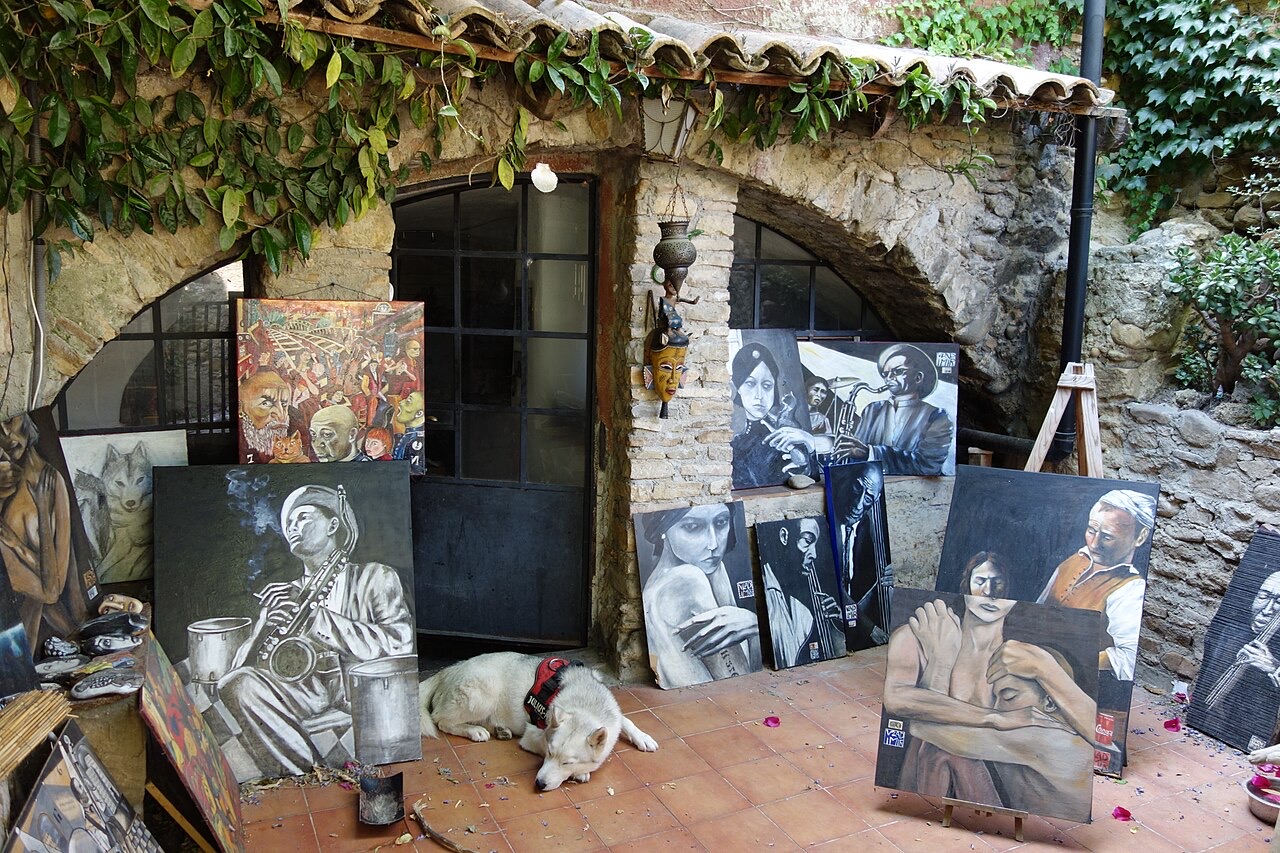 Canvases and paintings on display outside a studio set up in a stone house, under a vine pergola
Getting there is easy today. From Imperia head towards Sanremo — the handy exit is Arma di Taggia — then a small road climbs up through three hairpin bends, and it's a dead end: it stops at Bussana and goes no further. The centre is pedestrian-only, so you leave the car before it and walk up. A practical tip: on summer weekends the spaces fill up fast, so it's worth leaving the car a few hundred metres before the entrance and doing the last stretch on foot without the hassle.
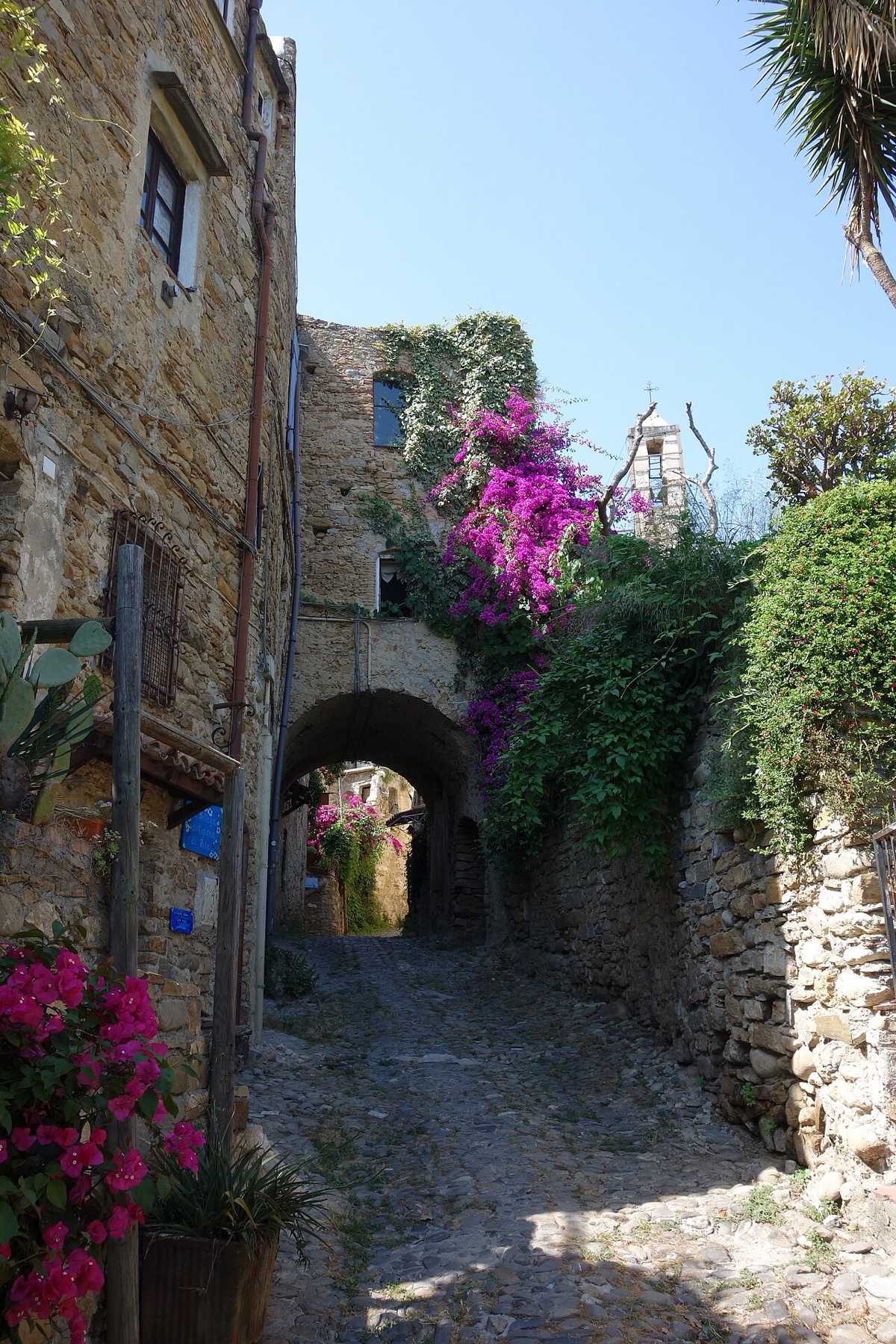 A steep alley climbing between the stone houses, with bougainvillea in bloom and the bell tower in the background
Inside there's no set route, and to me that's the charm. You lose yourself in the steep alleys, rough stone everywhere, twisting stairs, plants spilling out of windows. Some of the ruined houses are still lived in by the artists: you spot a curtain at the window, washing hung out, a cat on a low wall, and right next to it a collapsed arch nobody ever bothered to close up. That coexistence of the lived-in and the destroyed is the thing that always gets me. You'll find studios, galleries, ceramic and handmade-jewellery shops, a couple of spots for a coffee or a bite with a view over the rooftops. The most striking point is still Sant'Egidio: the church is an open-air shell, arches framing empty sky, and the bell tower that the earthquake somehow spared. You can't go inside — it's propped up and unsafe — but even from the outside it's worth the trip.
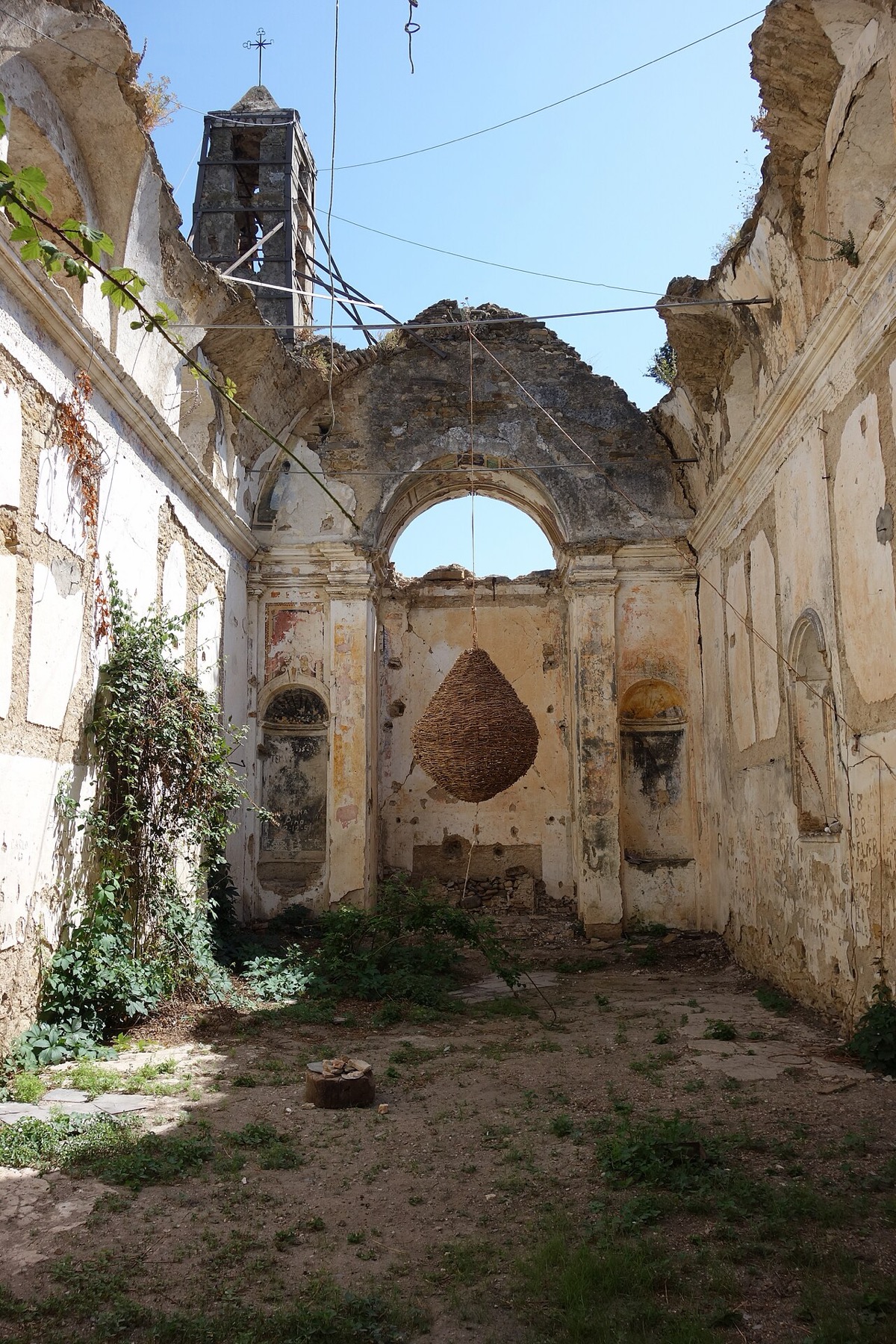 The church of Sant'Egidio reduced to an open-air shell, its arch framing empty sky and the bell tower that survived the earthquake
Now the honest part, because it has to be said. Bussana Vecchia isn't an open-air museum tended by the town hall: it's a real place, with real problems. Most of the village belongs to the Italian State, and for years the artists who live there have been treated as "occupiers." Heavy tax demands have arrived, there have been eviction threats and legal back-and-forth dragging on for decades. In certain corners you can feel the air of a place that might not be here in a few years, and that adds a veil of melancholy to everything else. There's also the tourist flip side: in high season and on weekends it gets crowded, and a few shops have drifted towards the easy souvenir. Go early in the morning or on a weekday, outside the peak months, and you'll get the real silence — the thing the place is actually worth coming for.
Wear comfortable shoes, because it's all uphill and on cobbles, and it's not great for anyone who struggles to walk or has a pushchair. Bring some cash — it comes in handy in a few of the shops. And take it for what it is: not a box to tick, but a couple of hours to go slow, look around, and let a few thoughts surface. If instead you'd rather stay by the sea and somewhere a bit more cheerful, I'd point you towards Cervo, a polished little village a stone's throw from the house. Bussana is something else: rougher, stranger, and for exactly that reason hard to forget.
Where to find it
- Bussana VecchiaArtists' village among the ruins of the 1887 earthquake, a hamlet of Sanremo. Pedestrian lanes, studios, galleries and workshops; the open-air shell of the church of Sant'Egidio with its surviving bell tower. Wear comfortable shoes — it's all uphill.Bussana Vecchia, Sanremo (IM)